32
Days

Manaslu Expedition (Standard Package)

8 Reviews in TripAdvisor
6 Reviews in Google Reviews
Wishlist

Mount Manaslu Expedition in Nepal is a challenging journey to the summit of the world’s eighth-highest peak. This expedition, suitable for climbers with prior mountaineering experience, tests your endurance and mental resilience. With the expert guides from GMT Adventures, you can be assured of a safe journey with increased chances of a successful summit. While prioritizing your well-being, we also prepare you for the harsh Himalayan conditions and equip you with state-of-the-art gear. This ensures the ultimate Mount Manaslu Expedition.

Trip Facts
Duration
32 Days
Trip Grade
Strenuous
Country
Nepal
Maximum Altitude
8,163 meters (26,781 feet)
Group Size
Flexible
Starts
Kathmandu
Ends
Kathmandu
Best Time
Spring (March - May) | Autumn (September-November)

Prepare for a rewarding journey to the summit of Mount Manaslu (8,163m) with GMT Adventures’ all-inclusive 32-day expedition. This challenging climb blends technical mountaineering with stunning Himalayan views and rich cultural experiences in the Numbri Valley.

Designed with safety as a priority, the itinerary includes gradual trekking, strategic acclimatization, expert training at base camp, and guided rotations between higher camps—helping you adapt to extreme altitude and prepare for a successful summit push. Join our expert-led team and turn your Manaslu dream into reality.

Major Highlights of Nepal Manaslu Expedition

  • Cultural exploration and preparation days in Kathmandu
  • A scenic drive to Jagat, marking the start of your high-altitude trek into the Manaslu region
  • Trekking through traditional Gurung and Tibetan villages like Deng, Namrung, and Samagaun, offering rich cultural insights
  • Experiencing local traditions and warm hospitality in remote Himalayan communities
  • Essential acclimatization days in Samagaun
  • Reaching Manaslu Base Camp (5,000 meters) to prepare for your Manaslu summit push
  • Acclimatization rotations through various higher camps (Camp I, II, III, IV)
  • Technical ascent through diverse terrain
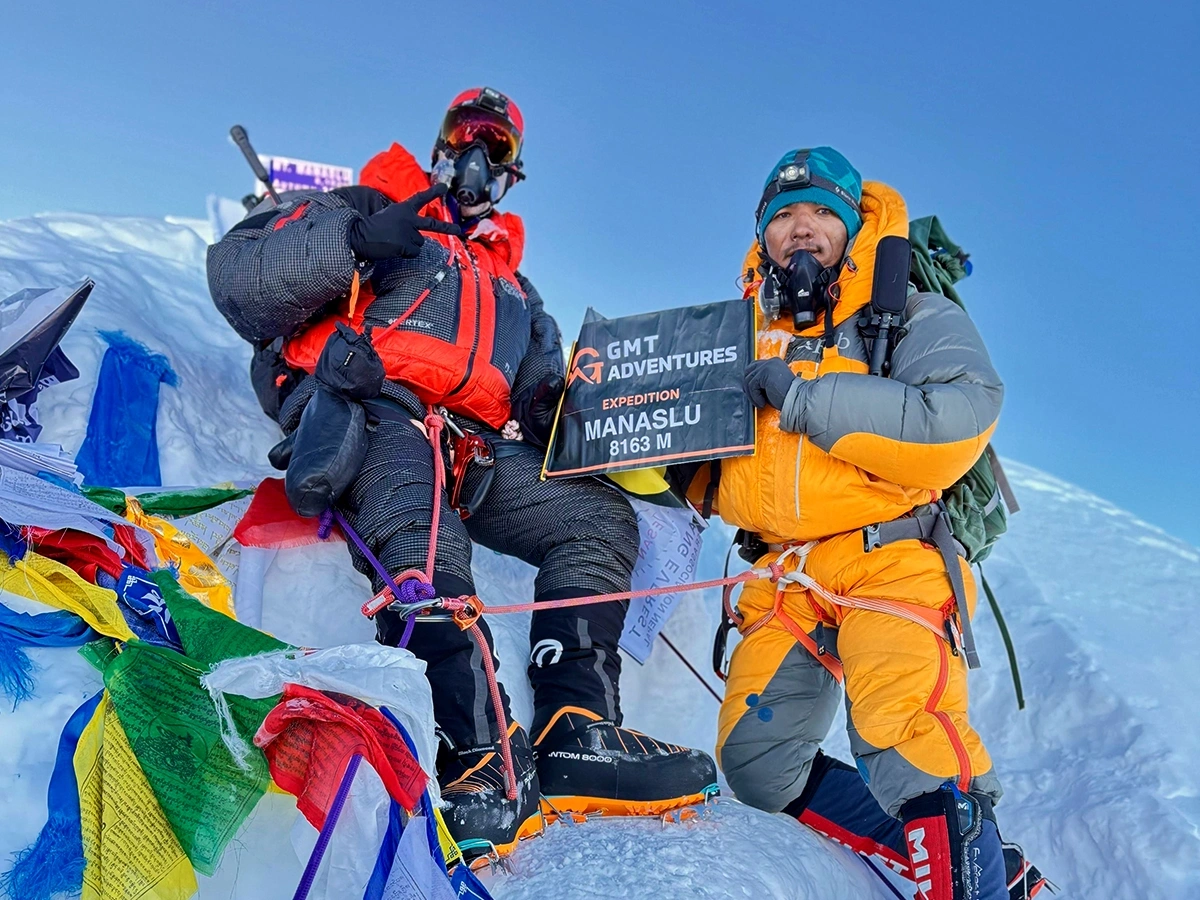
  • Summiting Mount Manaslu at 8,163 meters, the world's 8th highest peak

32-Day Manaslu Expeditions: Cost, Guides, Permits, and Logistics

Climbing Mount Manaslu is a challenging task. It requires a substantial financial investment and careful planning to turn your our dream of conquering the world’s eighth-highest peak into reality.

The cost of the 32-day Manaslu Expedition in Nepal depends on several major factors, including the level of support, luxury preferences, duration, season, and additional services. Also, considering the operational complexities, risks, and specialized support, the cost of the Manaslu Expedition is significantly higher than a standard Manaslu Circuit trek.

Get an all-inclusive Manaslu climbing package with GMT Adventures. Our comprehensive package includes government fees and taxes, logistics and services throughout your expedition, compensation for staff, all food and accommodation, and ground transportation services.

Depending on your preferences, you can also request customization services. For more details, contact our travel expert.

Navigating your way to the Manaslu Summit: Manaslu Expedition Camp System

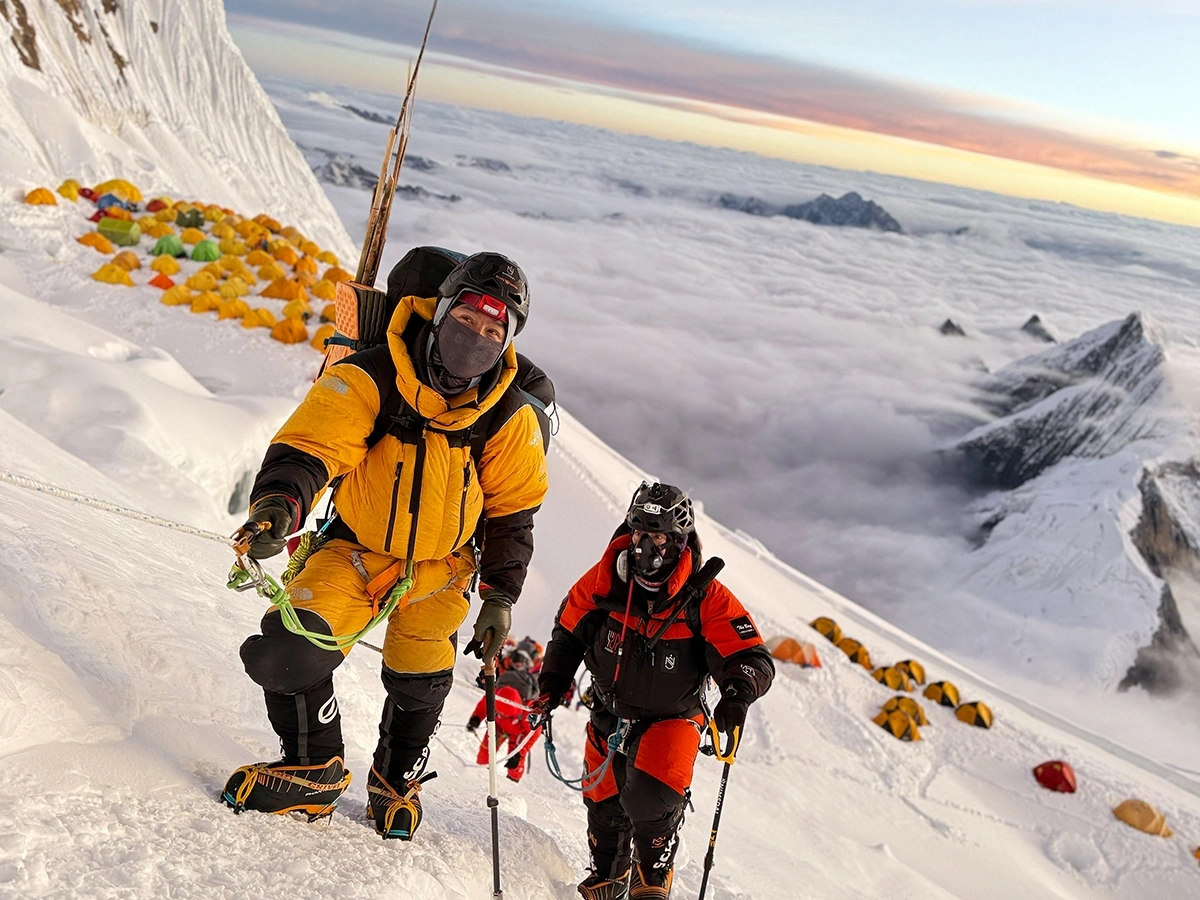
Summiting Manaslu requires strategic climbing across the high camps. Each camp plays a vital role in acclimatization and the summit push. These camps allow climbers to get used to the harsh conditions of the extreme altitudes and hone technical climbing skills. For a successful summit, camp rotation is crucial. Below are the four strategically located high camps in Mount Manaslu.

Camp 1: The Glacier Entry (5,700 meters / 18,700 feet)

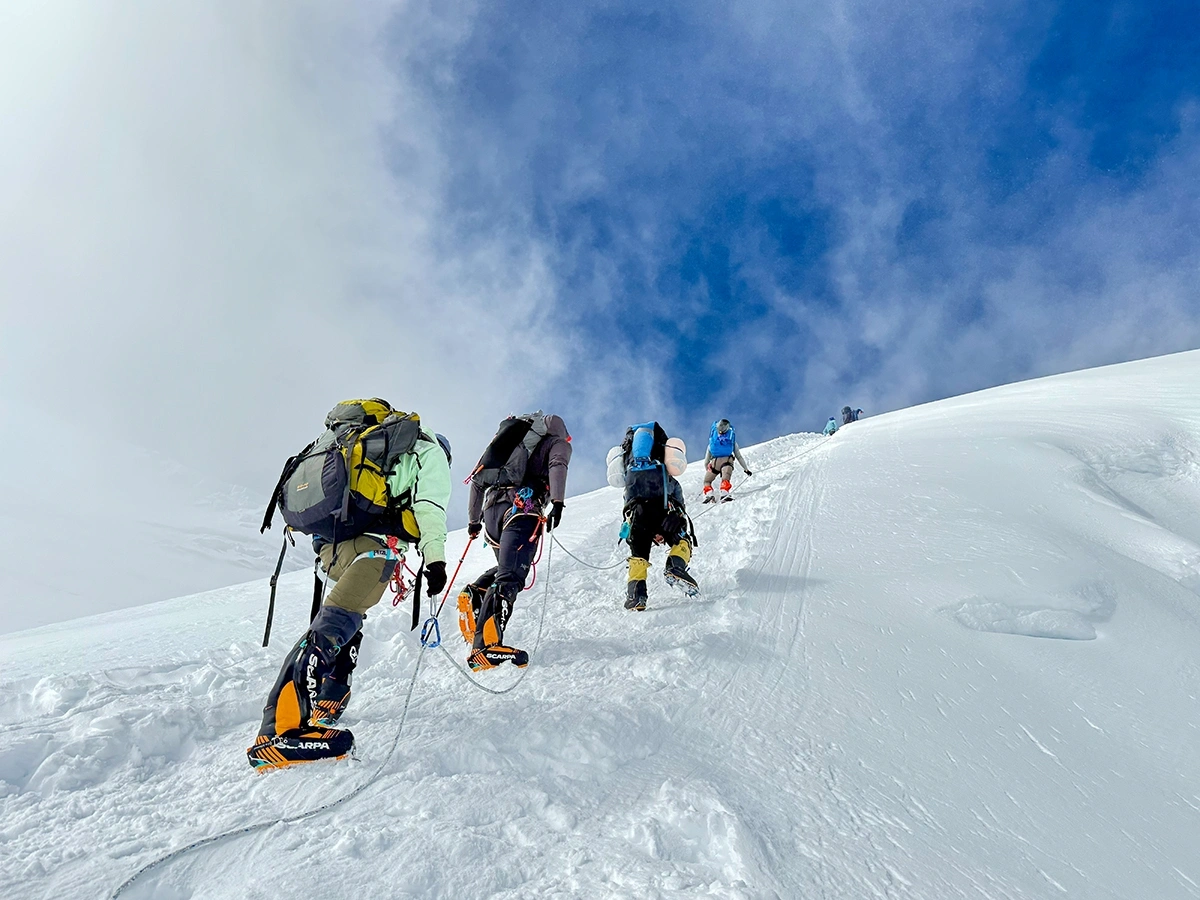
Camp 1 is located at the foot of the Manaslu glacier and marks the beginning of the more technical sections. To get to Camp 1, you will navigate through complex crevasses and seracs with the support of ropes. This camp is used for initial rotations, carrying loads, and adjusting to the lower sections of the mountain.

Camp 2: High on the Ridge (6,300 meters / 20,670 feet)

Located higher on a ridge, Camp 2 offers a more sheltered position than Camp 1. It serves as the main operational hub for climbers during the rotation period. From Camp 2, climbers move forward to Camp 3 before descending back as they practice the “climb high, sleep low” strategy. In Camp 2, our support staff set up a comfortable and well-equipped camp to help you rest and acclimatize in the harsh altitudes.

Camp 3: Approaching the Headwall (6,800 meters / 22,300 feet)

Camp 3 is located on a steep section, which is often icy, directly below the Manaslu headwall. You will experience thinner air here. Supplemental oxygen may be required, especially while sleeping. You will typically spend up to two nights in the higher altitude conditions. Here, you will test your gear and mental resiliency before heading to Camp 4.

Camp 4: The Summit Staging Point (7,400 meters / 24,280 feet)

Camp 4 is the ultimate staging point before the Manaslu summit push. Considering its location, close to the “death zone”, human life cannot be sustained here for prolonged periods. You will find harsh conditions, and tackle the brutal winds and freezing temperatures. Here, you will make a brief stop to prepare for the ultimate summit push.
Short Itinerary and Map

Manaslu Expedition (Standard Package) Detailed Itinerary

Day 1

Arrival in Kathmandu

The Manaslu Expedition in Nepal begins upon landing at the Kathmandu Airport. Upon arrival, our representatives will greet and help transfer you to your hotel in Kathmandu. Take some time to rest and unwind.

In the evening, you can self-explore the city, discover the lively atmosphere of the tourist center of Thamel, or head to a cozy restaurant and indulge in local delicacies.

Day 2

Preparation in Kathmandu and permit checks

Today is an important day. You will prepare for the expedition one last time before heading out to the mountains. Check that you have all your essential gear and equipment. You can also confirm with your guide that all permits and formalities are completed.

You will meet with your guide and fellow trekkers for a detailed briefing. Use this time to build a strong bond between your team and ask last-minute questions. This helps you clarify all the necessary details to mentally prepare you for your journey ahead.

Day 3

Drive to Jagat

The day takes you on a scenic drive from the bustling Kathmandu to Jagat. Along the journey, you will follow the winding mountain roads across several roadside settlements, enjoying the glimpses of the rural way of life in Nepal.

After an 8-9-hour drive, you will reach the charming village of Jagat. Nestled along the Budhi Gandaki River, Jagat is the starting point for your Manaslu trek. Upon checking into your hotel, you can take some time to relish the views of the mountains as you prepare for your trek.

Day 4

Trek to Deng

The trek to Deng begins with a hearty breakfast at your Jagat teahouse. After breakfast, you will follow the trails along the Budhi Gandaki River, making a gradual ascent. The journey takes you across several charming villages and suspension bridges across lush forests.

As you reach the higher altitude village of Deng, you will experience a shift in the cultural landscape, with a more prominent influence of Tibetan Buddhism evident in the architecture and local customs.

Day 5

Trek to Namrung

Leaving Deng behind, you will head on a journey toward the charming Gurung village of Namrung. Today, you will traverse along steep sections as you cross the lush rhododendron and pine forests. Along the way, you will find several Buddhist heritages, including prayer flags, chortens, and Mani walls.

As you reach Namrung, the surrounding scenery opens up, giving you a stunning panorama of the Manaslu range. Alongside the view, you can also experience the warm Gurung hospitality.

Day 6

Trek to Samagaun

Today’s trek continues along the Manaslu trails, offering awe-inspiring views of Mount Manaslu, Himalchuli, and Ngadi Chuli. The journey passes across several villages, such as Lihi and Sho, known for their terraced fields and traditional stone houses. As you approach Samagaon, you can experience a more pronounced Tibetan Buddhist culture.

Day 7

Rest/acclimatization day in Samagaun.

Acclimatization in Samagun is crucial as it allows your body to adjust to the increasing altitudes. This significantly reduces the risk of Acute Mountain Sickness (AMS) or altitude sickness and ensures a more memorable journey.

For better acclimatization, you will follow the “climb high, sleep low” strategy. You can visit the ancient Pungyen Gompa on a hilltop overlooking Samagaun. The Pungyen Gompa viewpoint also offers stunning views of the Manaslu range and its glaciers. Another possibility is a gradual trek toward the Manaslu Base Camp for a few hours.

Overnight stay in Samagaun.

Day 8

Trek to Base Camp

Leaving the final settlement of Samagaun behind, you will journey to the Manaslu Base Camp. The trail gradually ascends through barren, rocky terrain along the Manaslu Glacier moraine. As you travel toward your destination, the landscape becomes increasingly dramatic and wild. You will find yourself amid a natural amphitheater of icy peaks. With the gain in altitude, the air thins, making the trek more challenging.

At 5,000 meters, you will reach the Manaslu Base Camp, where you will find the rest of your expedition team, including Sherpa guides and porters. You will settle in your designated tent/camp, your home for the next few weeks.

Day 9-29

Climbing preparation, acclimatization rotations, load carries, technical training, and summit push.

The next 21 days are the most crucial period of the Manaslu Expedition. Your guide strategically prepares your routine, which comprises meticulous preparation, acclimatization, and camp rotation before the ultimate Manaslu summit push.

As a part of your preparation and physical conditioning triaging, you will engage in load carries and ferrying essential supplies and gear to higher altitudes. During the 21 days, you will also gain expert guidance and technical training from your Sherpa guides. You will learn to climb with fixed ropes, crampons, ice axes, and other essential gear on the challenging sections of the mountains.

The summit push is a gradual process with a series of rotations between Base Camp and higher camps (Camp I, II, III, and IV). These rotations adapt your body to the harsh high-altitude conditions, build resilience, and prepare you mentally for the demanding ascent of the Manaslu summit.

Day 30

Trek to Samagaun

After completing the summit program on Mount Manaslu (8,163m), the descent from Base Camp to Samagaun is gradual and relatively short. The trail retraces the glacial moraine route before reaching the traditional Nubri village of Samagaun. This day allows recovery from expedition fatigue.

Day 31

Trek to Namrung

The trail descends through alpine terrain toward Lho and Sho villages. Forest sections of pine and rhododendron begin to dominate the landscape as altitude decreases. Final close views of Manaslu are visible before reaching Namrung.

Day 32

Trek to Philim

You have now come to the end of your incredible journey. Depending on your flight schedule, our representative will pick you up and transfer you to the airport. Prepare to leave your hotel at least 3 hours before your flight. As you depart Nepal, you will take home cherished memories of your amazing 32-day Manaslu adventure.

Day 33

Trek to Machha Khola

Descending alongside the Budhi Gandaki River, the route passes through Jagat, Tatopani, and Dobhan. The trail consists of stone staircases and riverside paths before reaching Machha Khola, where road access resumes.
Day 34

Drive from Machha Khola to Kathmandu and transfer to hotel

The drive follows the Budhi Gandaki corridor via Arughat and Dhading before connecting to the Prithvi Highway toward Kathmandu. Road conditions vary depending on season, especially during monsoon.

Day 35

Celebration & Farewell Dinner

A dedicated celebration day recognizing the successful completion of the Manaslu Expedition. The evening includes a cultural farewell dinner hosted by the expedition organizer, featuring traditional Nepali cuisine and live cultural performances. Expedition certificates are distributed during this event.

Day 36

Final Departure

Transfer to Tribhuvan International Airport for your international departure flight. Officially concludes the Manaslu Expedition program.

Are you still confuse from where to start? GMT Adventures has solutions.

Cost Details

Included

1. Airport & Transportation Services

  • Arrival and departure airport pick-up and drop-off services (Airport–Hotel–Airport).

  • Ground transportation by private vehicle: Kathmandu–Jagat–Kathmandu and all required return transfers.

2. Accommodation & Meals

  • Four (4) nights hotel accommodation in Kathmandu with breakfast.

  • Single room accommodation in Kathmandu.

  • Full board meals during the trek and expedition (breakfast, lunch, and dinner), including tea and coffee.

  • High-quality accommodation and professionally managed Base Camp setup at Manaslu Base Camp.

  • Hygienic and freshly prepared meals throughout the expedition, including fresh green vegetables, fresh meat, fruits, and juice.

3. Government Permits & Expedition Royalties

  • Expedition royalty and climbing permit for Mount Manaslu issued by the Government of Nepal.

  • Manaslu Conservation Area Project (MCAP) entry permit.

  • Annapurna Conservation Area Project (ACAP) entry permit (if applicable to the route).

  • Restricted Area Permit for the Manaslu region.

  • Garbage management deposit fees as required by Nepalese authorities.

4. Insurance & Government Representation

  • Comprehensive medical and emergency rescue insurance for all Nepalese expedition staff.

  • One (1) Government Liaison Officer with full salary, accommodation, meals, and required equipment.

5. Expedition Logistics & Load Transportation

  • Porter and support staff services for transportation of personal luggage, climbing equipment, and expedition supplies.

  • All Nepalese staff salaries and allowances (excluding tips).

6. Complimentary Items

  • GMT Adventures branded duffle bag (175 litre)

  • GMT Adventures branded cap

7. Base Camp Infrastructure & Facilities

  • Fully equipped Base Camp setup, including:

    • Single sleeping tent

    • Dining tent

    • Kitchen tent

    • Toilet and shower tent

    • Staff tents, including tents for Nepalese Base Camp staff

    • Tables, chairs, and complete cooking equipment

  • Solar power system or generator with lighting and battery-charging facilities for laptops and other electronic devices.

  • Emergency oxygen supply maintained at Base Camp.

8. Expedition Leadership & Training

  • Experienced Expedition Leader (Gesman) leading the expedition from Base Camp to the summit and back, including all acclimatization rotations.

  • Comprehensive Base Camp training provided by the Expedition Leader, including:
    • Oxygen system use

    • Mask and regulator handling

    • Ice wall climbing techniques

    • Ladder crossing training

9. Climbing Support & Assistance

  • One (1) certified climbing guide to assist climbers, including support for carrying gear to high camps.

  • Dedicated Base Camp support staff.

10. High Camp Services & Logistics

  • High-altitude tents for Camps I, II, III, and IV.

  • Necessary high-altitude cooking equipment, including EPI gas and cooking pots.

  • High-energy meals for climbers, Expedition Leader, climbing guides, and support crew at all high camps (C1–C4).

  • Group climbing gear, including fixed and dynamic ropes installed as required during the climbing period.

  • High-altitude kitchen and dining services with one cook at Camp I and Camp II.

11. Oxygen System & Summit Support

  • Oxygen cylinders

  • One complete set of summit oxygen mask and regulator

  • One back-up oxygen cylinder, mask, and regulator

  • Professional rope-fixing team to establish and maintain the climbing route to the summit of Manaslu at no additional charge to climbers.

12. Communication, Weather & Medical Support

  • Satellite phone for emergency communication, including required permits.

  • Walkie-talkies with required permits for expedition communication.

  • Regular professional weather forecast reports from Meteotest, Bern (Switzerland) throughout the expedition.

  • Comprehensive expedition medical kit.

13. Certification

  • Official Manaslu summit certificate issued by the Ministry of Culture, Tourism and Civil Aviation (MOCTCA) upon successful ascent

Note: The maximum baggage weight per person is 25 kg on the flight from Kathmandu - Lukla - Kathmandu. Also, max weight to carry for each porter is 25 kg.

Excluded

1. International Travel & Entry Requirements

  • International airfare to and from Kathmandu.

  • Nepal entry visa fee, payable upon arrival.

2. Banking & Payment Charges

  • Wire transfer and bank service fees for all payments made to the GMT Adventures bank account.

3. Meals & Accommodation in Kathmandu

  • Meals in Kathmandu other than those specified in the itinerary. (Lunch and Dinner)

  • Extra accommodation in Kathmandu due to early arrival, late departure, flight delays, itinerary changes, or unforeseen circumstances.

4. Personal Expenses

  • Personal expenses during the trek and in Kathmandu, including but not limited to:

    • Telephone calls and internet/Wi-Fi charges

    • Toiletries and personal care items

    • Battery recharging and electronic device charging

    • Hot showers

    • Laundry services

    • Soft drinks, bottled or canned beverages

    • Specialty coffee or espresso drinks

    • Alcoholic beverages

5. Insurance & Medical Coverage

  • Comprehensive personal travel insurance.

  • High-altitude climbing insurance (coverage above 8000m altitude), including coverage for emergency medical treatment and helicopter evacuation.

6. Personal Climbing Equipment & Gear

  • Personal climbing and mountaineering equipment, including but not limited to:

    • High-altitude boots

    • Harness

    • Down suit or high-altitude clothing

  • Personal toiletries and any individual equipment not listed under “Cost Includes.”

7. Filming, Photography & Drone Permits

  • Fees for special filming, professional photography, media coverage, or drone permits required by Nepalese authorities.

8. Mandatory Summit Bonuses & Tips

  • Mandatory summit bonus for the expedition climber  (minimum USD 2,000).

  • Mandatory tips:

    • Minimum USD 200 per porter.

    • Minimum USD 400 for Base Camp and High Camp staff.

9. Unforeseen Costs & Miscellaneous

  • Any additional services or activities not mentioned in the itinerary.

  • Costs arising from itinerary changes due to weather, health issues, government regulations, or force majeure.

  • Any item not explicitly listed under the “Cost Includes” section.

Equipment Lists

Mount Manaslu Expedition consists of technical climbs, requiring additional climbing and support gear. Also, considering the extremely high-altitude weather and harsh conditions, it is crucial to prepare adequately. Below is a comprehensive list of gear and equipment for the Manaslu Expedition in Nepal.

Head
+
  • Sun cap
  • Desert cap
  • Balaclava
  • Fleece or warm hat (1–2 pcs)
  • Neck gaiter or buff mask (2–3 pcs)
Upper Body
+
  • Thermal base layer tops (2–3 pcs)
  • Fleece jackets (1–2 pcs)
  • Gore-Tex jacket (1 pc)
  • Wind-proof jacket(s) (1–2 pcs)
  • Down jacket(s) (1–2 pcs)
  • Quick-dry T-shirts (3–5 pcs, full-sleeve recommended)
Hands
+
  • Thin Fleece gloves (2 pairs)
  • Wind stopper/screen tap gloves (2 pairs)
  • Heavy guide gloves
  • Summit mittens – 8000 m
Lower Body
+
  • Thermal base layer bottoms (2–3 pairs)
  • Fleece trousers (1–2 pairs)
  • Gore-Tex pants (1 pair)
  • Mid-weight trekking pants (1–2 pairs)
  • Lightweight quick-dry trekking pants (2–3 pairs)
  • Gaiters for trekking boots
  • Down pants (1 pair)
  • Underwear (4–6 pairs)
Foot Wear
+
  • Summit boots – 8000 m (Pelliot, La Sportiva, Millet)
  • Climbing boots – 6000 m (same brand options)
  • Summit socks – 8000 m (2 pairs)
  • Regular trekking socks (5–8 pairs)
  • Gore-Tex trekking shoes
  • Camp booties (1 pair)
  • Slippers (1 pair)
Travel Documents
+
  • Valid passport (with a minimum of 6 months' validity)
  • Insurance paper and contact address
Sun Stuffs
+
  • Sun cream up to SPF 50
  • Lip guard SPF 30 to 50
  • UV-protected sunglasses
  • Lotion or moisturizer
Toiletries
+
  • Toilet paper and/or wet wipes
  • Toothpaste and toothbrush
  • Soap and shampoo
  • Towel and garbage bag
Eating & Drinking
+
  • 1-liter water bottle (Nalgene, BPA/BPS-free)
  • 1 to 1.5-liter thermos
Sleeping Bags
+
  • Sleeping Bags and Bedding
  • Down sleeping bag (-40 degrees Celsius, extreme comfort)
  • Sleeping bag (-20 to -30 degrees Celsius for base camp)
  • Sleeping bag linger
Bag Packs
+
  • Expedition Duffel Bag (90–120L)
  • Base Camp Backpack (35–45L)
  • High-Altitude Climbing Backpack (45–60L)
Climbing Equipments
+
  • Summit down suit – 8000 m (brands like Pelliot, Marmot, Mountain Hardware, North Face, Millet)
  • Climbing helmet
  • Crampons (ideally fitting your boots) + packing cover
  • Ice axe with spike and protector
  • Harness
  • Belay device / Figure-8 / ATC Guide
  • Jumar/ascender
  • Locking carabiners (3 pcs)
  • Non-locking carabiners (3 pcs)
  • Tape slings (240 cm or dynamic rope 6 mm, 300 cm)
  • Summit-purpose snow goggles (anti-fog, polarized, UV protection)
  • Glacier glasses (anti-fog, polarized, UV protection)
  • Headlamp (500-700 lumens) + spare batteries (e.g. Energizer Ultimate Lithium)
  • Walking stick/trekking pole
  • Pocket knife (Swiss)
  • Personal pee bottle
Medical & First Aid
+
  • Personal prescription medications
  • Comprehensive first aid kit (bandages, gauze, adhesive tape)
  • Pain relief and anti-inflammatory medication
Miscellaneous
+
  • Nail cutter
  • Umbrella or rain poncho
  • Hot water bag
  • Hand and toe warmers
  • Travel charger, earbuds
  • Powerbank, camera
  • Altimeter watch
  • Thermarest cell0-foam mattress
  • Down inflatable mattress
  • Inflatable pillow

Essential Information

When is the Best Time for the Mount Manaslu Expedition in Nepal?

Spring (March to May) and autumn (September to November) are the best times for the Mount Manaslu Expedition in Nepal. These seasons have distinct advantages, which are primarily characterized by stable weather and clearer skies.

Spring is a favorable season, offering warmer temperatures and longer daylight hours. The snowpack is more consolidated, contributing to a decrease in avalanches. However, the early months can be cold at higher altitudes. Proper planning and preparation are recommended for an early spring expedition.

On the other hand, autumn is considered the absolute best time for the Manaslu expedition. This post-monsoon season brings a dramatic decline in rainfall, offering crystal-clear Himalayan views. The weather is generally stable, with moderate conditions, but the latter months can get colder as winter approaches.

Manaslu Expedition Permits Update 2026 and 2027

Manaslu Restricted Area Permit (RAP): The Manaslu region is classified as a restricted area due to its proximity to the Tibetan border. The Nepal Department of Immigration issues this mandatory Manaslu Restricted Area Permit, which must be obtained through a registered trekking or expedition agency in Nepal.

  • September to November: USD 100 for 7 days with an additional USD 15 surcharge per person per day for each additional day.
  • December to August: USD 75 for 7 days and an extra USD 10 daily surcharge for each additional day.

Manaslu Conservation Area Permit Fee: The Manaslu Conservation Area permit is issued by the Manaslu Conservation Area Project and grants entry to this protected conservation area. The fees collected from this permit contribute to the conservation efforts, local development, and biodiversity protection within the region. The Manaslu Conservation Area Permit costs NPR 3000 (approximately USD 25) per person.

Annapurna Conservation Area Project (ACAP) Entry Permit: The Annapurna Conservation Area Project (ACAP) is issued by the National Trust for Nature Conservation (NTNC) and goes toward the conservation of the Annapurna Area. ACAP entry permit costs NPR 3000 (approximately USD 25) per person.

*To ensure a hassle-free experience, GMT Adventures handles all paperwork to obtain the necessary permits for your Nepal Mount Manaslu Expedition.

Nepal Manaslu Expedition: Difficult and Safety

The Manaslu Expedition, which involves summiting the world's eighth-highest peak, requires overcoming the harsh high-altitude climate, technical slopes, and numerous other challenges throughout the 32-day journey. The upper regions of the mountain, within the “Death Zone (above 8,000 meters), are infamous for high risks of hypoxia, frostbite, exhaustion, and acute mountain sickness. Additionally, climbers must be well-acquainted with their gear and equipment to conquer the technical sections, including glaciers, snow, icy slopes, and crevasses.

GMT Adventures prioritizes your safety during the Mount Manaslu Expedition. We provide state-of-the-art equipment and climbing gear, and carefully manage logistics for the entire climb. You will get constant support from our experienced Sherpa guides who ensure your well-being.

Mount Manaslu Expedition Insurance Policy

Comprehensive insurance is mandatory for the Mount Manaslu Expedition in Nepal. Having an all-inclusive insurance policy significantly reduces your financial burden in case of injury, health complications, or if a rescue operation becomes necessary during the expedition.

Ensure that you purchase an insurance policy that covers both rescue insurance, which covers helicopter rescue, and air evacuation. Also, verify that your policy does not exclude mountaineering activities and covers the maximum altitude of your climb.

For your assurance, GMT Adventures requests your high-altitude mountaineering insurance policy numbers before departure for Nepal. GMT Adventures reserves the right to withdraw any climbers who are unfit to face the challenges of the Mount Manaslu expedition.

*Note: Print extra copies of your passport, insurance, and any other essential documents.

Good to Know

Why Choose GMT Adventures for the Nepal Manaslu Expedition in Spring 2026?

GMT Adventures is your reliable partner for a safe and successful Manaslu ascent. With *** years of experience in Nepal mountaineering, we are trusted experts. Choosing the Manaslu Expedition with GMT Adventure gives you:

  • Certified Elite Mountaineering Experts: Our team of certified expert mountaineers, guides, and Sherpas works together to deliver a memorable ascent, prioritizing your safety. Our guides have exceptional records of successful Manaslu summits and extensive knowledge about the terrain and weather patterns.

  • Acclimatization Schedules to Reduce Risks of Altitude Sickness: Elevations over 5,000 meters are prone to altitude sickness, which can be fatal if not addressed promptly. Your safety and well-being are paramount. To ensure zero risk, we have strategically designed our itinerary by incorporating gradual ascents with calculated rest days. Additionally, we encourage climbers to stay hydrated and consume nutritious food throughout the journey.

  • Highly Skilled and Dedicated Sherpa Support: We partner with trained and experienced Sherpas with remarkable endurance and navigation skills. These professionals accompany you every step, assisting you in navigating difficult crevasses, providing critical gear support and transportation, securing ropes and ladders, and conducting life-saving rescue operations.

  • Sustainability and Community Commitment: We believe in sustainability and eco-friendliness. Through our expedition, we give back to the mountains by helping empower local communities, creating economic growth opportunities, and ensuring proper waste management.

  • 1:1 Guide-to-Client Ratio: Every climber gets dedicated support from an experienced Nepali guide, ensuring constant guidance, care, and support throughout the expedition.

  • No Hidden Costs: Our packages are transparent and include comprehensive pricing, including permits, expedition services, Sherpa support, and supplemental oxygen.

Manaslu Expedition with Expert Guide Gesman Tamang

Our Manaslu Expedition offers you the chance to stand on the top of the world with the guidance of Mr. Gesman Tamang, a certified mountaineer from the National Nepal Mountain Guide Association (NNMGA) and the International Federation of Mountain Guides Associations (IFMGA). You may have seen Gesman featured in the film “14 Peaks.” Gesman has successfully summited Mount Everest five times, including one expedition where he led a blind climber to the summit. His record of success brings essential, detailed knowledge and expertise to this high altitude adventure.

Gesman is originally from Chimding, a small village in Solukhumbu. He grew up in the shadow of the Himalayas and started his career on the mountains as a guide at the age of 14 years. In addition to Mount Everest, Gesman has summited several mountains above 8,000 meters: K2, Kanchenjunga, Cho Oyu, Sisapangma, Manaslu, and Annapurna. His Annapurna ascent was done without oxygen.

With Gesman’s leadership and our Nepali climbing team of Sherpa guides, you have an amazing opportunity to achieve the greatest mountaineering challenges safely and successfully!

Manaslu Expedition (Standard Package) FAQs

The duration of the Mount Manaslu Expedition depends on several factors, such as preparations, endurance, weather, and government policies. However, with GMT Adventures, you can complete the entire expedition in 32 days.

Spring (March to May) and autumn (September to November) are the most ideal times for the Manaslu Expedition. The weather conditions are generally stable during these times of the year.

Yes. It is highly recommended for climbers to have climbed technical route peaks that are 6000 meters high. The climber should be well acquainted with using ropes, crampons, and ice axes.

As per our itinerary, you will take a scenic drive from Kathmandu to Jagat, followed by a multi-day trek (typically 6-7 days) to Manaslu Base Camp.

Yes. You will need the following permits issued by various government bodies:

  • Manaslu Restricted Area Trekking Permit
  • Manaslu Conservation Area Permit (MCAP)
  • Annapurna Conservation Area Permit (ACAP)

GMT Adventures processes all paperwork to obtain the permits for the Manaslu Expedition. You can consult with our travel expert and provide them with your necessary documents.

Yes. Most climbers use supplementary oxygen above 7,000 meters for safety, especially during the summit push.

Recent statistics show a 60% to 70% success rate for summit attempts. The success typically depends on weather, team preparation, and experience level.

The biggest risks include avalanches, crevasses, altitude sickness, unpredictable weather, and technical ice sections.

GMT Adventures establishes 4 camps while climbing Mount Manaslu. The camps are generally set in the following altitudes:

  • Camp 1: 5,700 meters / 18,700 feet
  • Camp 2: 6,300 meters / 20,670 feet
  • Camp 3: 6,800 meters / 22,300 feet
  • Camp 4: 7,400 meters / 24,280 feet

As per Nepalese law, all foreign climbers must hire a licensed climbing guide and join a registered expedition team. Independent climbing is not permitted.

Manaslu Climbing Expedition Mount Everest Expedition
Less Crowded: Only a few hundred summiters attempt to climb Manaslu, compared to the thousands on Everest. This makes the Anaslu Expedition more remote and peaceful. More Crowded: Mount Everest is the most popular Himalayan 8000er. As the Everest summit is the top of the world, you are likely to encounter long queues during your summit attempt at peak season.
Lower Cost: The Manaslu Expedition is typically cheaper than Everest climbing. Higher Cost: Climbing Mount Everest is far more expensive due to. The permit costs USD 11,000.
Technical but Shorter: Manaslu Expedition requires climbers to have good technical skills, but can be completed in a shorter duration. Higher Altitude Challenges: At approximately 8849 meters, Everest involves longer exposure to the “death zone”, harsh weather, and increased oxygen dependency.

Though more technical, Manaslu climbing is comparatively less difficult than the Everest expedition. On Mount Everest, there is a higher risk of hypoxia and exhaustion, and the terrain is more difficult, such as the Khumbu Icefall and South Col route.

Need Help? Call Us+977 9823373306