27
Days

Ama Dablam and Lobuche Peak

8 Reviews in TripAdvisor
6 Reviews in Google Reviews
Wishlist

This 27-day Ama Dablam and Lobuche East Peak Climbing with Everest Base Camp Trek offers a challenging, high-altitude expedition for experienced mountaineers. It combines trekking to Everest Base Camp with the technical ascents of Lobuche East (6,119m) and Ama Dablam (6,812m). GMT Adventures prioritizes your safety. You will find constant support from expert Sherpa guidance with the inclusion of strategic acclimatization, making your journey an all-inclusive adventure in Nepal's Khumbu region.

Trip Facts
Duration
27 Days
Trip Grade
Strenuous
Country
Nepal
Maximum Altitude
6,812 meters (Ama Dablam Summit)
Group Size
Flexible
Starts
Kathmandu
Ends
Kathmandu
Best Time
Spring (March - May) | Autumn (September-November)

“From Sacred Ama Dablam to Technical Lobuche - Rise Higher.”

GMT Adventures takes you on an ultimate Himalayan adventure on a thrilling Ama Dablam and Lobuche East Peak Climbing expedition with the Everest Base Camp Trek. On this 27-day journey, you will conquer three of the most revered destinations in the Khumbu region. You will summit the majestic Ama Dablam (6,812 meters) and Lobuche East (6,119 meters), and trek to Everest Base Camp (5,364 meters) on a single journey.

Considering the sheer duration and difficulty, this highly technical ascent is designed for experienced mountaineers looking for an ultimate experience and a profound sense of accomplishment. During this one-month Himalayan adventure, you will relish the extraordinary scenery, experience the rich Sherpa culture, and soak in the tranquil ambiance of the Everest region.

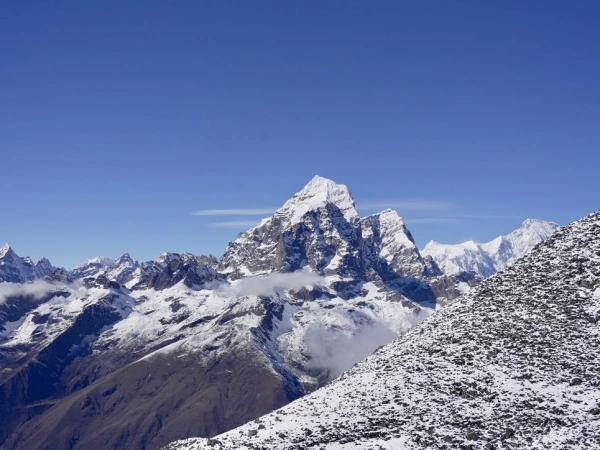
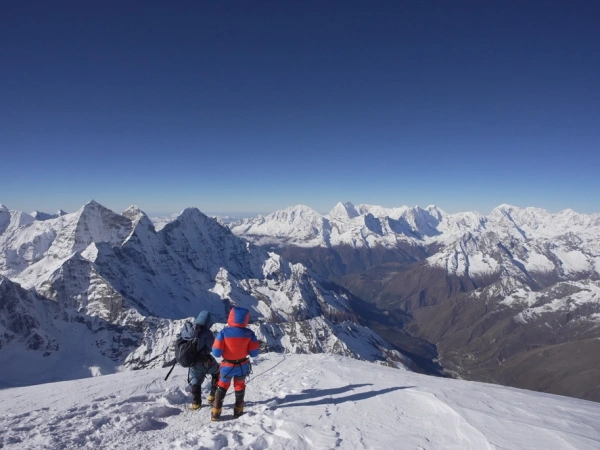
The Ama Dablam and Lobuche Peak Climbing with Everest Base Camp Trek takes you to high-altitude regions. From these viewpoints, you can enjoy the vast landscape of the Khumbu region with an unparalleled panoramic view of Everest, Lhotse, Nuptse, Makalu, and surrounding peaks. Despite the technical difficulties and high elevations, we prioritize your safety above all else. For a safe and successful ascent, our itinerary includes strategic acclimatization days to allow your body to cope with the increasing altitudes. This significantly reduces the chances of Acute Mountain Sickness (AMS).

Furthermore, during the Lobuche East and Ama Dablam expeditions, you will receive intensive training and support from our expert guides. You will participate in rotation camps, which will allow you to hone your climbing skills and acclimate to the harsh conditions.

The 27-day Ama Dablam and Lobuche East Climbing with Everest Base Camp Trek demands physical and mental strength. If you have it in you to conquer these Himalayan giants, join our expert-led expedition today!

Major Highlights of Nepal Ama Dablam and Lobuche East Expedition with Everest Base Camp Trek

  • Thrilling mountain flight from Kathmandu to Lukla, the gateway to the Everest region
  • Trek through the iconic Everest Base Camp route, experiencing vibrant Sherpa culture
  • Explore Namche Bazaar
  • Acclimatization hike to Hotel Everest View
  • Visit the revered Tengboche Monastery
  • Challenging Lobuche East Peak climbing (6,119m), offering panoramic views of Everest, Lhotse, Nuptse, and Makalu
  • Journey to Everest Base Camp (5,364m), the foot of the world's highest peak
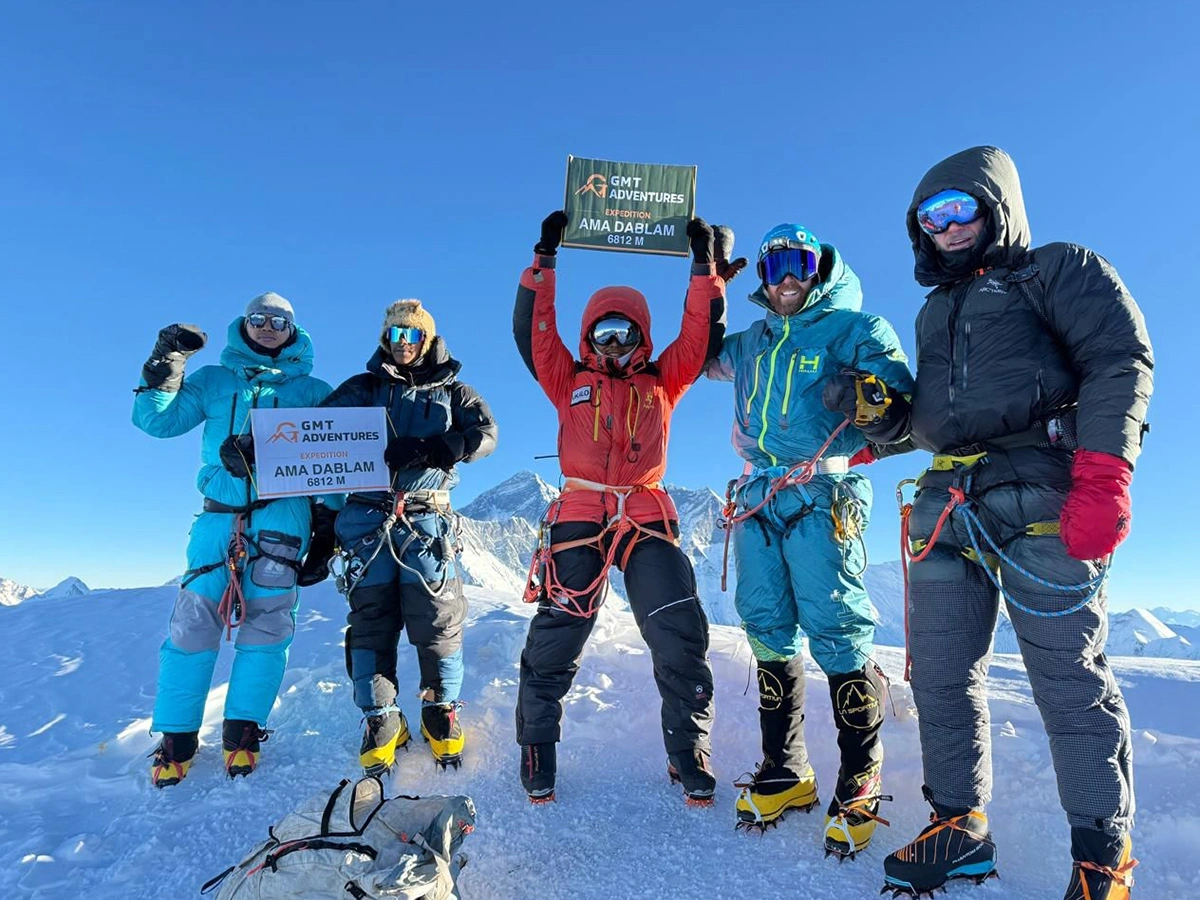
  • Summit the stunning Ama Dablam (6,812m)
  • Extensive technical training and acclimatization rotations through Ama Dablam's high camps
  • Expert guidance and support from highly experienced Sherpa climbing guides
  • Strategic acclimatization schedule to minimize the risks of altitude sickness

27-Day Ama Dablam & Lobuche East Climbing: Cost, Guides, Permits, and Logistics

The 27-day Ama Dablam and Lobuche East Climbing with Everest Base Camp Trek is a comprehensive Himalayan journey that takes you to three of the most revered destinations in the Himalayas. Due to the technical assistance, risks, specialized support, and duration, this expedition requires a substantial financial investment.

However, the cost of Ama Dablam and Lobuche East Climbing with the Everest Base Camp Trek can vary from one expedition to another. Depending on factors like support level, luxury preferences, season, and additional services, your pricing and budgets are likely to change.

GMT Adventures offers an all-inclusive package designed to provide a hassle-free experience. In this package, we include all essential government fees and permits, logistics, expedition services, compensation for our dedicated staff, and more.

Understanding the Ama Dablam and Lobuche East Camp Systems

The Ama Dablam and Lobuche East expedition requires careful planning with strategic acclimatization. Climbers go through several high camps as they prepare for the summit push. These camps are essential for staging and adapting to the extremely high-altitude conditions. Strategic rotations here also give you time to hone your technical climbing skills.

Lobuche East High Camp (5,400 meters)

The Lobuche East High Camp is located above the Lobuche Village and offers a crucial staging point for climbers. Our Sherpa porters ensure the high camp is well-equipped, giving climbers an ideal rest point before the ultimate summit push.

Ama Dablam Camp 1: Glacier Entry (5,639 meters)

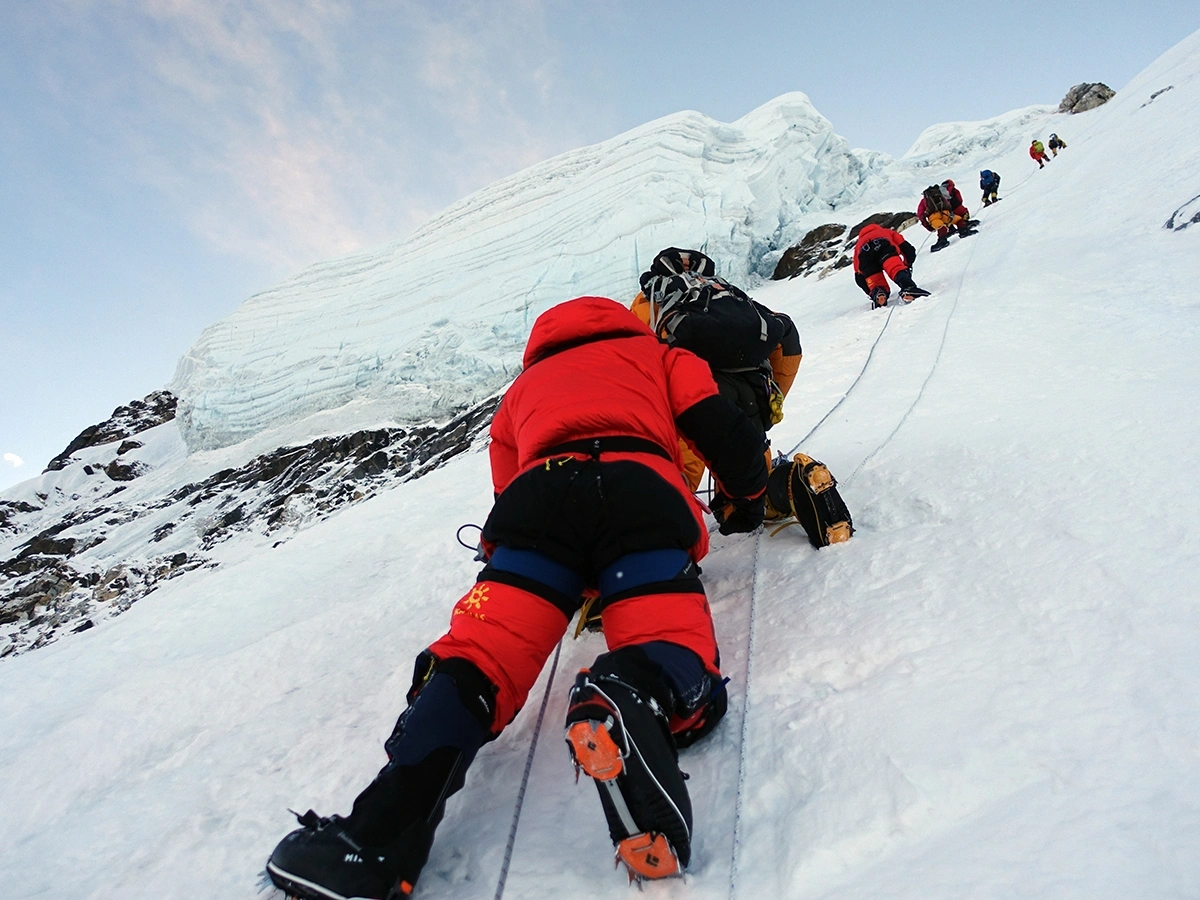
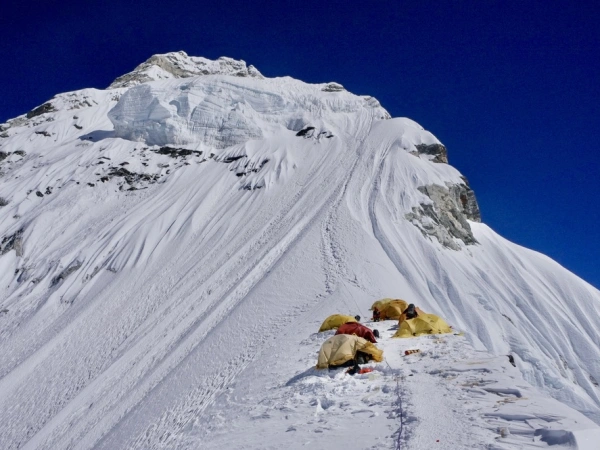
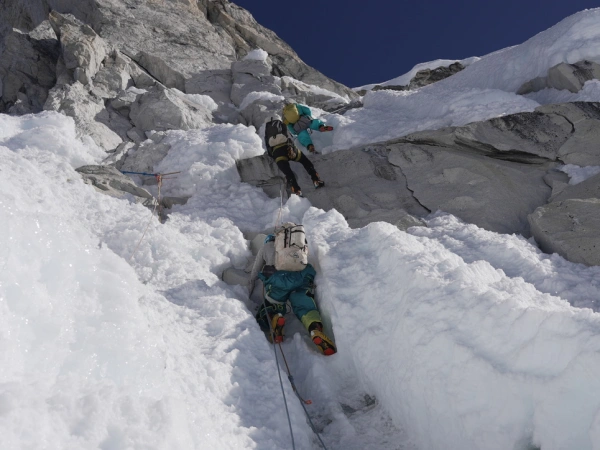
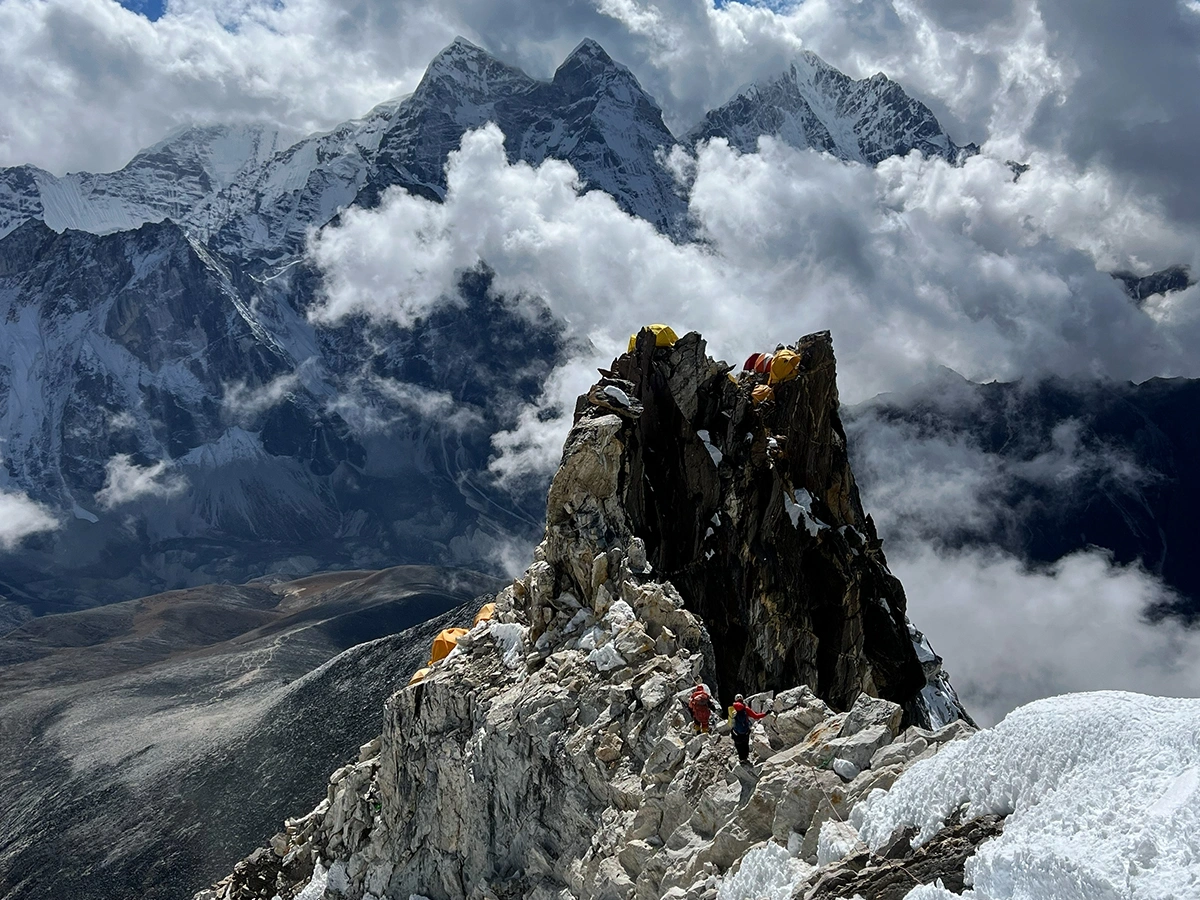
After a successful Lobuche East ascent, you will head toward Ama Dablam. Like Lobuche, you will find strategically placed high camps. Ama Dablam’s Camp 1 is placed on a rocky ledge. This point transitions regular trekking to serious climbing that involves challenging glaciers, crevasses, and rappelling fixed ropes, and the use of crampons and ice axes. You can spend up to two nights here for initial acclimatization.

Ama Dablam Camp 2: High on the Ridge (6,200meters)

Camp 2 is located at 6,200 meters on a relatively flat section of the Southwest Ridge of Ama Dablam. You will find better shelter here compared to the exposed Camp 1. From Camp 2, you will head to Camp 3 and descend back to practice the critical “climb high, sleep low” strategy.

Ama Dablam Camp 3: Approaching the Summit (6,400 meters)

Camp 3 is located beneath the technical sections of the “Yellow Tower” and the " q390-5rfcfGray Couloir”. This very high and challenging camp will likely require supplementary oxygen, especially while sleeping, due to the thin air. It is the final camp before the summit, where you will spend a single night before the final summit push.
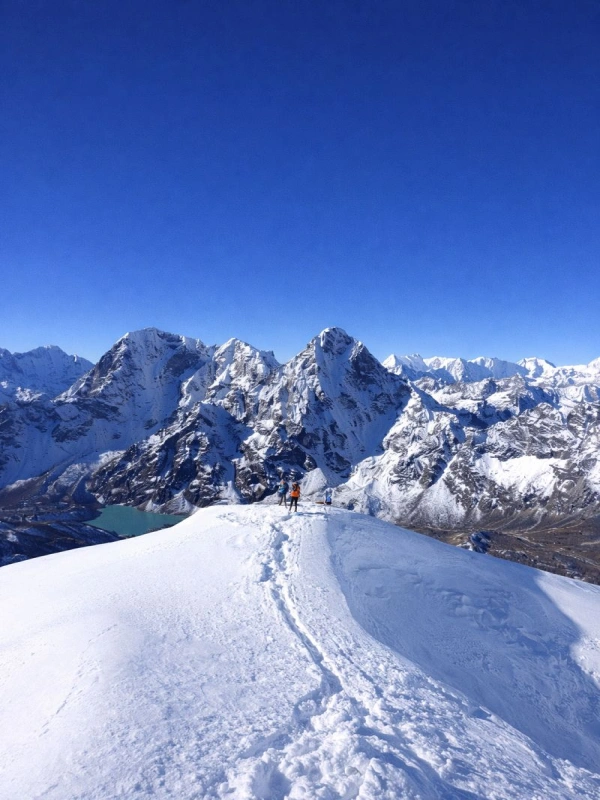
Short Itinerary and Map

Ama Dablam and Lobuche Peak Detailed Itinerary

Day 1

Arrival in Kathmandu (1,400m)

The Nepal Ama Dablam and Lobuche East Peak Climbing with Everest Base Camp Trek begins upon your arrival at the Kathmandu Airport. Our representatives will welcome and transfer you to your hotel. Take some time to rest and unwind before soaking in the initial impression of Nepal’s bustling capital. You can visit the vibrant tourist hub of Thamel or take a stroll around your hotel.

Day 2

Rest Day in Kathmandu: Expedition Preparation and Gear Check

Today, you will spend the time carefully preparing and finalizing your personal gear for your expedition. Ensure all climbing gear and equipment are in perfect condition. If you are short on any item, this is also the best time to engage in last-minute shopping in Kathmandu’s extensive trekking stores.

You will also meet your expedition leader and fellow climbers for a comprehensive briefing, which includes safety protocols and route details. You can also build an initial connection with your expedition team, who will accompany you on your incredible one-month Ama Dablam and Lobuche East expedition (with EBC trek).

Day 3

Fly to Lukla (2,860m), Trek to Phakding (2,800m)

After breakfast at your hotel, you will board an early-morning flight from Kathmandu to Lukla’s Tenzing-Hillary Airport. This thrilling journey gives you an aerial view of the diverse landscape. Upon reaching Lukla, you will meet the rest of your expedition team and begin the trek.

Your first destination is Phakding. The trek consists of a gentle descent through picturesque forests and Sherpa villages along the Dudh Koshi River.

Day 4

Trek to Namche Bazaar (3,440m)

The trek to Namche Bazaar includes a significant ascent. You will follow the Dudh Koshi River and cross several suspension bridges, including the iconic Hillary Bridge. During your trek, you will find breathtaking views of Lhotse and Ama Dablam, with the first glimpse of the iconic Mount Everest.

A 5 to 6-hour trek takes you to the bustling commercial hub of the Khumbu region. Here, you can soak in the vibrant market as you find yourself surrounded by a natural amphitheater of mountains.

Day 5

Acclimatization Day in Namche Bazaar: Hike to Hotel Everest View (3,880m)

Today is your first acclimatization stop. Acclimatization while traversing the high altitude regions is crucial as it allows your body to adjust to the harsh conditions and the thin atmosphere of the Himalayas.

As a part of the strategic acclimatization, you will visit the renowned Hotel Everest View. Enjoy the breathtaking views of Mount Everest, Lhotse, Nuptse, Ama Dablam, and other surrounding peaks from the hotel’s terrace before heading back to your Namche Tea house. This is a crucial “climb high, sleep low” strategy that ensures better acclimatization and significantly reduces the risks of Acute Mountain Sickness (AMS) or altitude sickness.

Day 6

Trek to Dibuche (3,760m) and Visit Tengboche Monastery

From Namche, you will trek through the dense rhododendron and pine forests, enjoying the rewarding views of Mount Everest and Ama Dablam. Next, you will descend to Phunki Tenga before taking a steady uphill hike to Tengboche.


Tengboche is a significant spiritual center of the Khumbu region. You can visit the ancient Tengboche Monastery and soak in the serene aura of this pilgrimage destination. After spending some time here, you will descend to Dibuche for the night.

Day 7

Trek to Dingboche (4,410m)

Leaving Dibuche behind, you will continue your journey through the stunning Imja Khola valley. The journey takes you across the Imja Khola and past charming chortens and Mani walls. As you head to a higher elevation, you will find a gradual shift in the landscape. The sub-tropical forests fade into more alpine and exposed terrain with increasingly dramatic views of the Himalayan peaks like Ama Dablam, Lhotse, and Island Peak.

After a 5 to 6-hour hike, you will reach the picturesque valley of Dingboche, a crucial acclimatization stop.

Day 8

Acclimatize in Dingboche: Hike up to Nangkartshang Peak (5,083m)

Dingboche offers another crucial acclimatization stop. Here, you will take on a challenging, but rewarding hike to Nangkartshang Peak. Reaching the summit of this incredible peak gives you magnificent views of Ama Dablam, Makalu, Lhotse, Cho Oyu, and Island Peak.

You will descend to Dingboche to practice the “climb high, sleep low” strategy, allowing your body to adjust to the increasing altitude.

Day 9

Trek to Lobuche Village (4,940m) via Thukla Everest Memorial Pass

Today’s trek takes you to Lobuche Village. The journey passes through the Thukla Everest Memorial Pass, a memorial site dedicated to those who perished on Everest and other Himalayan peaks. From here, you will follow the trail along the western side of the Khumbu Glacier, giving you stunning views of Nuptse and other surrounding peaks.

A 4 to 5-hour trek across the rugged terrain will take you to the high-altitude zone of Lobuche Village, where you will spend the night.

Day 10

Early Morning Trek to Gorakshep (5,164m), Everest Base Camp (5,364m), Return to Lobuche Village

An epic day awaits today as you will reach the foot of the world’s highest peak, Mount Everest. The day begins with an early morning trek across the rugged terrain to EBC via Gorekshep. Upon reaching the Everest Base Camp, you can experience the grandeur of the Khumbu Icefall and the vibrant tent city during the climbing season.

After experiencing the lively atmosphere, you will return to Lobuche.

Day 11

Trek to Lobuche High Camp (5,400m)

Your Lobuche East expedition begins today. Today, you will ascend to the Lobuche High Camp. This is a critical staging point before the Lobuche East Peak Climbing summit attempt. The journey takes you across a steady and gradual climb over the rocky terrain. In the High Camp, our experienced team will set up the tent for you to rest and prepare your gear before the summit push.

Day 12

Lobuche East Peak Summit Push (6,119m), Descend to Pheriche Village (4,371m)

The summit of the Lobuche East Peak begins before dawn. This is a challenging journey with unparalleled rewards. You will navigate the fixed ropes across icy sections under the guidance of your expert Sherpa guide.

Upon reaching the 6,119-meter Lobuche East Peak summit, you will experience a sense of immense accomplishment and enjoy a breathtaking panoramic view of Everest, Lhotse, Nuptse, Ama Dablam, and Makalu.

After spending some time on the peak, you will safely descend past High Camp and continue toward Pheriche.

Day 13

Trek to Ama Dablam Base Camp (4,450m)

From Pheriche, you will trek toward the Ama Dablam Base Camp across picturesque valleys and pastures. Throughout today’s trek, you will find the beautiful Ama Dablam dominating the skyline. With every step, you approach closer to its distinctive twin peaks.

Upon reaching the Ama Dablam Base Camp, you will rest in the tent camp amid the stunning glacial amphitheater. This also marks the beginning of the most technical phase of your Ama Dablam and Lobuche East Peak Climbing with Everest Base Camp Trek.

Day 14-16

Training at Base Camp

Days 14 to 16 are dedicated to intensive training and acclimatization at the Ama Dablam Base Camp. You will continue honing your technical climbing skills with your expert Sherpa team. Practice the fixed rope ascents and descents, ice axe techniques, and proper crampon usage before the ultimate ascent. The training helps boost your confidence and tackle the different challenges along the way to the summit.

Day 19-20

Climb from Base Camp to Camp 1 (5,639m), then to Camp 2 (6,200m). Return to Camp 1 for acclimatization before descending to Base Camp.

Before the summit push, you will participate in the critical rotation phase for acclimatization and route familiarization. You will ascend from Base Camp to the different high camps of Mount Ama Dablam. During this period, you will meticulously follow the “camp high, sleep low” strategy to allow your body to cope with the extreme conditions of the high altitude regions.

Day 20-23

Summit Push: Climb from Base Camp to Camp 1 (5,639m), then Camp 3 (6,400m), Summit (6,812m), and descend to Base Camp.

You have come to the pinnacle of your expedition. You will spend 4 days acclimatizing before the ultimate summit push. In this period, you will climb from Base Camp to Camp 1, where you will spend two nights for final acclimatization. Next, you will make a demanding ascent to Camp 3, where you will take a brief rest. The Ama Dablam summit push begins at around midnight or 1 a.m. With the guidance of our skilled Sherpa guides, you will navigate the difficult terrain to reach the Ama Dablam summit (6,812 meters).

After spending some time celebrating this amazing fete, a long and technical descent to Base Camp awaits.

Day 24

Trek to Namche Bazaar (3,440m)

From Base Camp, you will make a significant descent to Namche Bazaar. On this relatively easier journey, you will retrace your steps through Imja Khola, past Dibuce, and climb back up to Tengboche before finally reaching Namche Bazaar.

Day 25

Trek to Lukla (2,860m)

Today marks the final trekking day in the Everest region. The day begins as you retrace your steps from Namche along the Dush Koshi River toward Lukla. Your journey is mostly downhill. During today’s trek, you can soak in the serene Himalayan atmosphere and look back on your extraordinary journey.

Day 26

Fly to Kathmandu: Airport Pickup and Transfer to Hotel

Enjoy a hearty breakfast under the shadows of the Himalayan giants as you prepare to leave for Kathmandu. The journey to the vibrant capital city takes you on a scenic flight, offering aerial views of the Himalayan landscapes.

Upon reaching Kathmandu, you will be transferred to your hotel. You have the rest of the day to yourself. You can rest and unwind, enjoy a holistic spa experience, or explore the city’s vibrant cultural sites.

Day 27

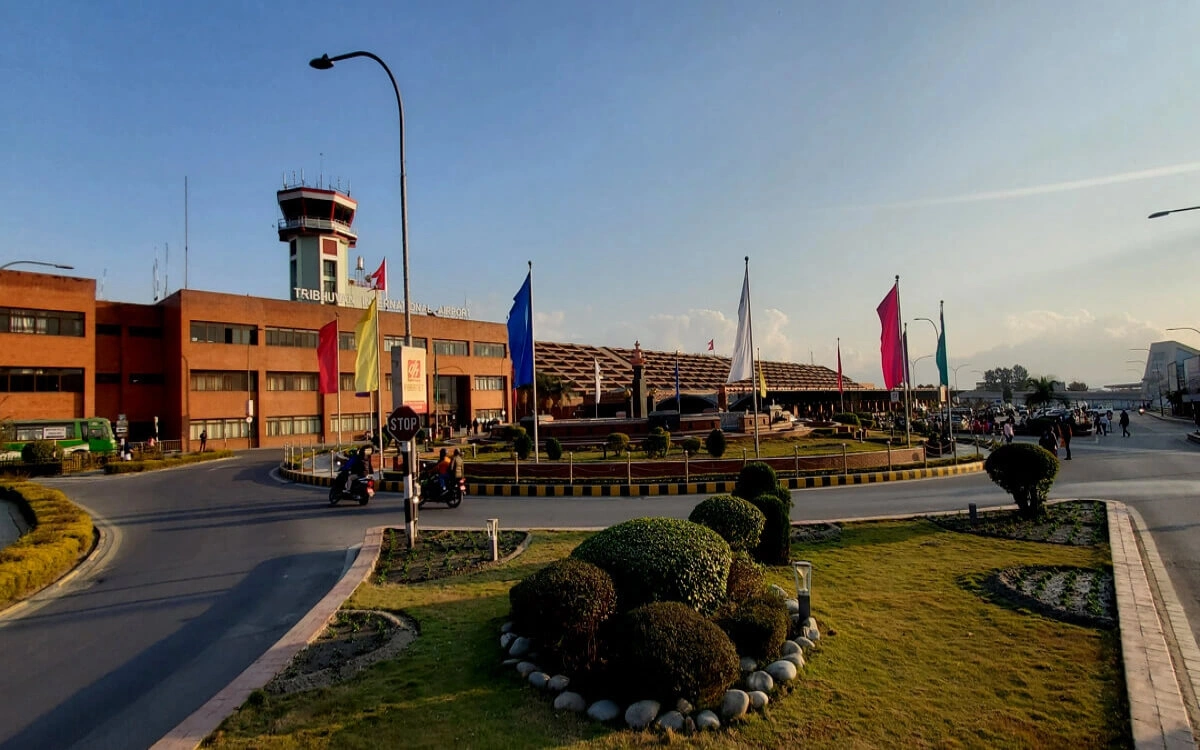
Departure Day: Hotel Pickup and Transfer to Tribhuvan International Airport

Your incredible Ama Dablam and Lobuche East Peak Climbing with Everest Base Camp Trek officially concludes today. Depending on your flight schedule, a representative from GMT Adventures will meet you at your hotel. Prepare to leave for the airport at least 3 hours before your boarding time.

Are you still confuse from where to start? GMT Adventures has solutions.

Cost Details

Included

1. Air & Ground Transportation

  • Domestic air transportation between Kathmandu and Lukla (round trip).

  • Arrival and departure transfers by private vehicle (Airport–Hotel–Airport).

2. Accommodation in Kathmandu

  • Three (3) nights accommodation at a 4-star hotel in Kathmandu on a bed-and-breakfast (B&B) basis.

3. Government Permits & Official Fees

  • Expedition royalty and climbing permit fees issued by the Government of Nepal for:

    • Mount Ama Dablam

    • Lobuche Peak

  • Sagarmatha National Park entry permit.

  • Pasang Lhamu Rural Municipality entry permit and applicable fees.

  • TIMS card (Trekkers’ Information Management System) for all trekkers.

  • Government Liaison Officer fee and facilitation as required by the Nepal Government.

  • Garbage management services, including waste deposit, collection, transportation, and environmentally responsible disposal as per Nepal tourism and conservation regulations.

4. Staff Insurance

  • Accidental insurance coverage for all Nepalese staff involved in the expedition.

5. Expedition Logistics & Equipment Transportation

  • Transportation of all expedition equipment from Lukla throughout the trek.

  • Porter or yak support for transportation of up to 30 kg of personal climbing gear per member.

6. Complimentary Items

  • GMT Adventures branded duffle bag

  • GMT Adventures branded cap

7. Accommodation & Meals During the Trek

  • Hotel/lodge accommodation during the trek.

  • Full board meals (breakfast, lunch, and dinner) during the trek, including tea and coffee.

  • Lodging, meals, and professionally managed Base Camp setup at Ama Dablam Base Camp.

  • Daily provision of hot drinking water as required.

8. Porter & Base Camp Support Staff

  • Porter service for personal luggage from Lukla to Ama Dablam Base Camp and return to Lukla.

  • Experienced Base Camp cook and kitchen staff serving Lobuche High Camp and Ama Dablam Base Camp.

9. High Camp Services & Infrastructure

  • High-altitude services at Camps I, II, and III for both peaks, including:

    • High-altitude tents

    • Necessary cooking equipment, including EPI gas and cooking pots

    • High-energy meals for members, Sherpas, and support crew

    • Group climbing equipment, including fixed and dynamic ropes installed as required

  • High-altitude tents shared by two (2) members per tent at high camps.

10. Expedition Leadership, Guides & Staff

  • Experienced Expedition Leader (Gesman) and trekking group leader supported by an assistant guide, for both Lobuche Peak and Ama Dablam.

  • Certified climbing guides assigned for summit support.

  • All Nepalese staff and porters’ salaries, daily wages, food, equipment, and clothing included.

  • Climbing guide salary, food, equipment, and clothing fully covered.

11. Training & Technical Preparation

  • Rock wall and technical gear training conducted at Lobuche High Camp and Ama Dablam Base Camp.

12. Oxygen System & Rope Fixing

  • Emergency oxygen cylinder available at Base Camp.

  • One (1) summit oxygen mask provided at Base Camp.

  • Professional rope-fixing team of experienced Sherpas to establish and maintain climbing routes.

13. Communication & Medical Support

  • Walkie-talkies for communication between Base Camp and the mountain.

  • Comprehensive medical kit available for members and expedition staff.

14. Bonuses

  • Sherpa carry bonuses and route-fixing charges included.

Excluded

1. International Travel & Entry Requirements

  • International airfare to and from Kathmandu.

  • Nepal entry visa fee, payable upon arrival.

2. Banking & Payment Charges

  • Wire transfer and bank service fees for all payments made to the GMT Adventures bank account.

3. Meals & Accommodation in Kathmandu

  • Meals in Kathmandu other than those specified under the B&B hotel plan.

  • Extra accommodation in Kathmandu due to early arrival, late departure, flight delays, itinerary changes, or unforeseen circumstances.

4. Personal Expenses

  • Personal expenses during the trek and in Kathmandu, including but not limited to:

    • Telephone calls and internet services

    • Toiletries and personal care items

    • Battery recharging

    • Hot showers

    • Laundry services

    • Soft drinks, bottled or canned beverages

    • Specialty coffee or espresso drinks

    • Alcoholic beverages

5. Insurance & Medical Coverage

  • Comprehensive personal travel insurance.

  • High-altitude climbing insurance, including emergency medical treatment and helicopter evacuation.

6. Personal Climbing Equipment & Gear

  • Personal climbing and mountaineering equipment, including boots, harness, down suit, and personal accessories.

  • Personal toiletries and individual gear not listed under “Cost Includes.”

7. Filming, Photography & Drone Permits

  • Fees for professional filming, photography, media coverage, or drone permits as required by Nepalese authorities.

8. Tips & Gratuities (Mandatory)

  • Mandatory tip for porters: minimum USD 200 per porter.

  • Mandatory tips for Base Camp and High Camp staff: minimum USD 400.

9. Unforeseen Costs & Miscellaneous

  • Any additional services or activities not mentioned in the itinerary.

  • Any item not explicitly listed under the “Cost Includes” section.

  • Costs arising from itinerary changes due to weather conditions, health issues, or force majeure.

Equipment Lists

Ama Dablam and Lobuche East Peak (with EBC trek) consist of technical climbs, requiring additional support gear. You will face the extremely technical challenges and encounter high-altitude weather and harsh conditions. Therefore, we recommend preparing adequately. Below is a comprehensive list of gear and equipment for Ama Dablam and Lobuche East Peak Climbing with the Everest Base Camp Trek.

Head
+
  • Sun cap
  • Desert cap
  • Balaclava
  • Fleece or warm hat (1–2 pcs)
  • Neck gaiter or buff mask (2–3 pcs)
Upper Body
+
  • Thermal base layer tops (2–3 pcs)
  • Fleece jackets (1–2 pcs)
  • Gore-Tex jacket (1 pc)
  • Wind-proof jacket(s) (1–2 pcs)
  • Down jacket(s) (1–2 pcs)
  • Quick-dry T-shirts (3–5 pcs, full-sleeve recommended)
Hands
+
  • Thin Fleece gloves (2 pairs)
  • Wind stopper/screen tap gloves (2 pairs)
  • Heavy guide gloves
  • Summit mittens – 8000 m
Lower Body
+
  • Thermal base layer bottoms (2–3 pairs)
  • Fleece trousers (1–2 pairs)
  • Gore-Tex pants (1 pair)
  • Mid-weight trekking pants (1–2 pairs)
  • Lightweight quick-dry trekking pants (2–3 pairs)
  • Gaiters for trekking boots
  • Down pants (1 pair)
  • Underwear (4–6 pairs)
Foot Wear
+
  • Summit boots – 8000 m (Pelliot, La Sportiva, Millet)
  • Climbing boots – 6000 m (same brand options)
  • Summit socks – 8000 m (2 pairs)
  • Regular trekking socks (5–8 pairs)
  • Gore-Tex trekking shoes
  • Camp booties (1 pair)
  • Slippers (1 pair)
Travel Documents
+
  • Valid passport (with a minimum of 6 months' validity)
  • Credit/debit card
  • Passport-size photo (2 copies)
  • Insurance paper and contact address
  • Addresses of the family members and/pr the company contact
Sun Stuffs
+
  • Sun cream up to SPF 50
  • Lip guard SPF 30 to 50
  • UV-protected sunglasses
  • Lotion or moisturizer
Toiletries
+
  • Toilet paper and/or wet wipes
  • Toothpaste and toothbrush
  • Soap and shampoo
  • Towel and garbage bag
Eating & Drinking
+
  • 1-liter water bottle (Nalgene, BPA/BPS-free)
  • 1 to 1.5-liter thermos
  • Spoon, fork, bowl, mug (optional)
Bag Packs
+
  • Rucksack (35 L–50 L)
  • Duffel bag (120 L–150 L, 2 pcs)
  • Waterproof stuff sacks or dry bags (small/medium/large, 3–4 pcs)
Climbing Equipments
+
  • Summit down suit – 8000 m (brands like Pelliot, Marmot, Mountain Hardware, North Face, Millet)
  • Climbing helmet
  • Crampons (ideally fitting your boots) + packing cover
  • Ice axe with spike and protector
  • Harness
  • Belay device / Figure-8 / ATC Guide
  • Jumar/ascender
  • Locking carabiners (3 pcs)
  • Non-locking carabiners (3 pcs)
  • Tape slings (240 cm or dynamic rope 6 mm, 300 cm)
  • Summit-purpose snow goggles (anti-fog, polarized, UV protection)
  • Glacier glasses (anti-fog, polarized, UV protection)
  • Headlamp (500-700 lumens) + spare batteries (e.g. Energizer Ultimate Lithium)
  • Walking stick/trekking pole
  • Pocket knife (Swiss)
  • Personal pee bottle
Miscellaneous
+
  • Nail cutter
  • Umbrella or rain poncho
  • Hot water bag
  • Tenacious tape repair kits
  • Hand and toe warmers
  • Travel charger, earbuds
  • Powerbank, camera
  • Altimeter watch
  • Satellite phone with credit
  • GPS tracker
  • Sleeping Bags and Bedding
  • Down sleeping bag (-40 degrees Celsius, extreme comfort)
  • Sleeping bag (-20 to -30 degrees Celsius for base camp)
  • Thermarest cell0-foam mattress
  • Down inflatable mattress
  • Sleeping bag linger
  • Inflatable pillow

Essential Information

When is the Best Time for the Ama Dablam and Lobuche East Peak climbing with the Everest Base Camp Trek in Nepal?

The best time for Ama Dablam and Lobuche East Peak Climbing is in spring (March to May) and autumn (September to November). These seasons are best known for stable weather with more favorable conditions for expeditions in the Himalayas.

Spring has warmer temperatures and longer daylight hours. The snowpack in the higher regions is more consolidated, which reduces the risks of avalanches. However, remember that early spring can be very cold, especially at higher elevations. You may require extra preparations if you are planning an early-spring expedition.

Autumn is the peak season for peak climbing. This post-monsoon season offers clear visibility of the panoramic landscape. The weather is generally stable with moderate daytime temperatures and chilly evenings. Your expedition in spring enhances the climbing experience, and the favorable weather conditions also contribute to your safety.

Nepal Ama Dablam and Lobuche East Peak Climbing with Everest Base Camp Trek: Difficulty and Safety

The Ama Dablam and Lobuche East Peak Climbing with Everest Base Camp Trek in Nepal is a challenging and demanding expedition. This journey is suitable for experienced mountaineers with exceptional physical fitness and mental strength.

During this expedition, you conquer two iconic peaks and reach the Everest Base Camp. You will first conquer Lobuche East (6,119 meters), which is also an excellent practice peak for technical climbing. After conquering Lobuche East, you will journey to the summit of Ama Dablam (6,812 meters).

Ama Dablam is known for its highly technical climbs and includes steep rock, ice, and mixed terrain. You need to be an expert at navigating the exposed ridges, challenging headwalls, and complex sections.

Due to the high altitude and difficult terrain, there are high risks of injury and altitude-related illnesses. However, GMT Adventures prioritizes your safety. We provide the best available climbing equipment, plan all logistics, and ensure continuous and expert support. We further plan strategic acclimatization days and prepare you for the technical sections of the majestic peak.

Ama Dablam and Lobuche East Peak Climbing with Everest Base Camp Trek Insurance Policy

Get a comprehensive travel insurance that covers high-altitude climbing. An all-inclusive insurance is mandatory as it is critical for reducing your financial burden in case of an unfortunate event, injury, or health complications. Your policy should also cover the emergency rescue operations.

Your insurance policy must include and cover

  • High-altitude Helicopter Rescue: This is a critical insurance coverage that includes helicopter rescue and emergency air evacuation from high altitudes, including directly from your expedition routes or base camps.
  • Medical Treatment: In case of medical expenses, which include hospitalization, doctor’s fees, and repatriation to your home country, your insurance should cover these expenses.
  • Mountaineering Coverage: Ensure that your policy precisely states that your insurance covers mountaineering and climbing activities up to the maximum expedition altitude (6,812 meters).

*Note: As a part of our operational safety protocols, GMT Adventures requires you to provide your all-inclusive insurance policy details with your unique policy numbers before your departure to Nepal. For more insurance-related queries, contact our travel expert!

Good to Know

Why Choose GMT Adventures for the Ama Dablam and Lobuche East Peak Climbing with Everest Base Camp Trek?

GMT Adventures is your trusted partner for a safe Ama Dablam and Lobuche East Peak Expedition with the Everest Base Camp Trek. Our expert Sherpa guides provide extensive support for climbers, ensuring a memorable and successful climb. Here are the top reasons to choose GMT Adventures for your high-altitude expeditions in Nepal:

Certified Elite Mountaineering Experts: Our team comprises elite Sherpa guides who are certified by both national and international mountaineering associations. We have completed multiple summits of Ama Dablam and Lobuche, helping us familiarize ourselves with the diverse challenges, rugged terrain, microclimates, and weather patterns of the Khumbu region.

Strategic Acclimatization Schedules to Reduce Risks of Altitude Sickness: Your safety and well-being are paramount. As your journey takes you to regions above 5,000 meters, there is a significant increase in the risk of altitude-related sickness, which can be fatal if not managed promptly. To reduce such risks, we have strategically included rest and acclimatization days. Additionally, we encourage the climbers to stay hydrated, consume nutritious food, and avoid alcoholic beverages throughout the expedition.

Highly Skilled and Dedicated Sherpa Support: Our Sherpa guides and support staff are highly trained with remarkable endurance and navigation skills. You will find constant support and guidance from these professionals throughout your journey, including expert navigation, critical gear support, and transportation. They will also assist you by fixing ropes and ladders, and conducting life-saving rescue operations.

Sustainability and Community Commitment: We believe in sustainability and eco-friendliness. Through our expedition, we give back to the mountains by helping empower local communities, creating economic growth opportunities, and ensuring proper waste management.

Transparent and No Hidden Costs: Our expedition packages are fully transparent and inclusive. You will find prices that cover all necessary permits, expedition services, dedicated Sherpa support, and essential supplementary oxygen. This commitment to financial transparency allows you to complete your journey with peace of mind.

Customization and Personalized Experience

GMT Adventures understands that every traveler has unique needs, preferences, and schedules. The Everest Base Camp along with Ama Dablam and Lobuche peak can be fully customized, including itinerary length, walking pace, accommodation standards, extra acclimatization days, and pre- or post-trek activities. This ensures a journey tailored to individual comfort, interests, and fitness levels without compromising safety or experience quality.

Before departure, GMT Adventures provides a detailed trek briefing, covering route details, daily walking hours, altitude considerations, accommodation, meals, packing essentials, and safety protocols. This personalized preparation allows every client to trek with confidence, knowledge, and peace of mind. Combining customization with professional guidance and local expertise, GMT Adventures ensures each Everest Base Camp with Ama Dablam and Lobuche peak is a unique and unforgettable Himalayan adventure.

Ama Dablam and Lobuche Peak FAQs

The total duration of this comprehensive trek in the Khubmu region is flexible and depends on the preferences of climbers. However, our standard package can be completed in 27 days and includes crucial acclimatization and rest days.

Spring (March to May) and autumn (September to November) have the most ideal weather conditions for the Ama Dablam and Lobuche East Expedition. The success rate, during these seasons, is higher with significantly lower risks.

Yes. Since both Ama Dablam and Lobuche East are highly challenging peaks, prior mountaineering experience is a must. We recommend this journey to mountaineers with proficiency in using ropes, crampons, ice axes, and other technical gear.

For safety and better performance, climbers can use supplementary oxygen above Camp 2 and during the final summit push.

Your journey to Ama Dablam Base Camp and Lobuche High Camp begins with a scenic flight from Kathmandu to Lukla. From Lukla, you will trek through several charming villages to reach Lobuche Village. From Lobuche Village, you will continue toward Lobuche High Camp and ascend Lobuche Peak. After a successful completion of Lobuche Peak climbing, you will trek to Ama Dablam Base Camp to begin the Ama Dablam expedition.

You will need the following permits for the Ama Dablam and Lobuche East expedition:

  • Expedition royalty and permit to climb Ama Dablam and Lobuche
  • Sagarmatha National Park permit
  • Pasang Lhamu Rural Municipality permit

The success of your ascent depends on various factors, including weather conditions, team preparation, and the climber’s experience. Compared to lesser technical peaks, Ama Dablam has a lower success rate.

Altitude sickness, avalanches, rockfall, icefall, crevasses, and the harsh high-altitude conditions pose significant risk during the Ama Dablam and Lobuche East expedition.

As per Nepali law, all foreign climbers need to hire a licensed climbing guide and be a part of a registered expedition team, like GMT Adventures, for both Ama Dablam and Lobuche Peak expeditions. Independent climbing is strictly prohibited.

Yes. Ama Dablam climbing is more difficult and technically demanding than Lobuche East. Ama Dablam consists of more difficult terrain, including steep rock and ice, and requires advanced technical skills.

GMT Adventures highly recommends reviewing our detailed cancellation terms before purchasing the Ama Dablam and Lobuche East package. In case of cancellation, deposits are non-refundable and non-transferable. Refunds for the remainder of the balance depend on the timing of your cancellation. For more information, contact our travel expert.

What Our Guests Say?

You May Also Like

island peak way

Lobuche and Island Peak

Duration
21 Days
Trip Grade
Strenuous
Need Help? Call Us+977 9823373306