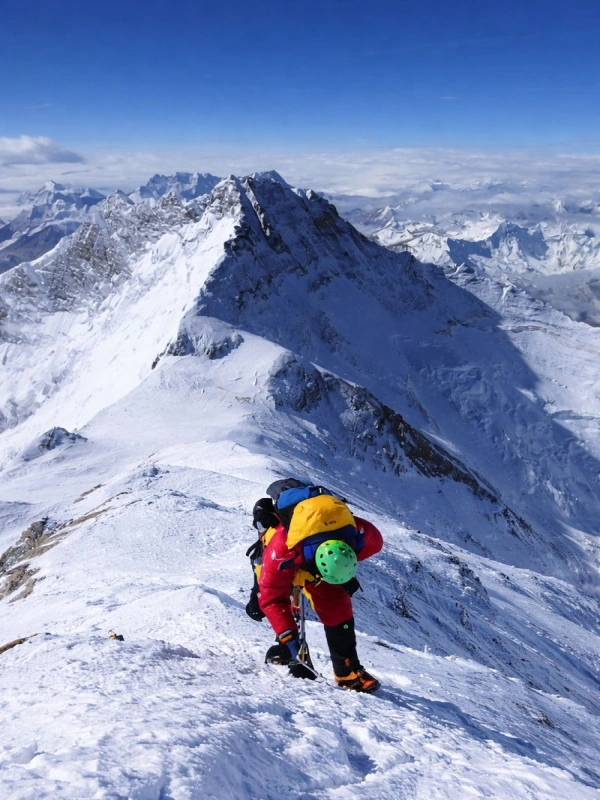
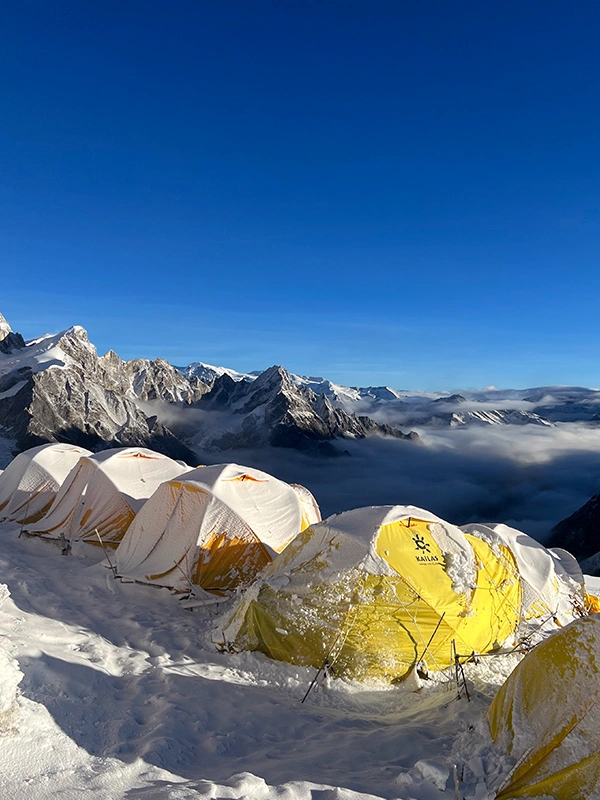
The Makalu Expedition is one of the most demanding and least crowded 8000-meter climbs in Nepal, offering a true wilderness experience. The journey begins with a scenic flight to Tumlingtar followed by a trek through remote villages, dense forests, and the stunning Barun Valley. As the trail progresses, climbers gradually ascend to Makalu Base Camp, where the expedition phase begins.
From here, the climb involves multiple acclimatization rotations through high camps, navigating glaciers, steep ice faces, and exposed ridges. The final ascent to the summit of Mount Makalu requires strong technical skills, endurance, and favorable weather conditions. Despite its difficulty, Makalu rewards climbers with unmatched views, solitude, and a sense of true exploration rarely found on more commercial peaks.
Trip Highlights
- Summit the world’s 5th highest peak – Makalu (8,485m)
- Experience one of the most remote and untouched Himalayan regions
- Trek through the beautiful and diverse Makalu Barun Valley
- Enjoy breathtaking views of Everest, Lhotse, and surrounding peaks
- Technical climbing on ice, rock, and glacier terrain
- Fewer crowds compared to Everest and other 8000m expeditions
- Rich cultural experience in traditional Rai and Sherpa villages
- True expedition-style adventure with full support and logistics
- High success satisfaction for experienced mountaineer
Climbing Route & Technical Challenges
The ascent of Mount Makalu is considered one of the more technical among the 8000-meter peaks, demanding both physical endurance and advanced mountaineering skills. Climbers follow a route that includes steep snow slopes, exposed ridgelines, and sections of ice and mixed climbing. Establishing and moving between high camps requires careful coordination, rope fixing, and load carrying. The final summit ridge is განსაკუთრებით exposed and often affected by strong winds, making the climb both physically and mentally demanding.
Acclimatization & Expedition Strategy
A successful Makalu expedition relies heavily on a well-planned acclimatization schedule and disciplined climbing strategy. Climbers follow a “climb high, sleep low” approach, gradually ascending to higher camps before returning to base camp for recovery. This rotation system helps the body adapt to extreme altitude and reduces the risk of altitude sickness. Proper hydration, nutrition, and rest play a critical role throughout the expedition, while experienced guides carefully monitor weather conditions and team health to determine the ideal summit window.
Remote Wilderness & Cultural Experience
Makalu is renowned for its remote and untouched environment, offering a true sense of exploration far from the busier trekking regions. The journey begins through traditional Rai and Sherpa villages, where climbers experience authentic Himalayan culture and hospitality. As the trail progresses into the Makalu Barun National Park, the landscape transforms dramatically—from lush forests and terraced fields to high alpine valleys and glacial terrain. This combination of cultural immersion and pristine wilderness makes the Makalu expedition not just a climb, but a deeply enriching Himalayan experience.