7
Days

Ghorepani Poon Hill Trek

8 Reviews in TripAdvisor
6 Reviews in Google Reviews
Wishlist

The Ghorepani Poon Hill Trek is an ideal short, beautiful trip in the Annapurna region. It is perhaps the most suitable trekking destination in Nepal. Himalayan Local Guide Pvt. Ltd would highly recommend this trek to all age groups of trekkers. Get ready to immerse yourself in the panoramic vistas of the Himalayas and enjoy the fresh environments.

Moreover, the Ghorepani Poon Hill trek from Kathmandu/Pokhara provides the opportunity to see fantastic landscapes, diverse local culture, typical towns, and the highest Mount Dhaulagiri and Annapurna I.

Trip Facts
Duration
7 Days
Trip Grade
Easy
Country
Nepal
Maximum Altitude
4532
Group Size
1-10
Starts
Kathmandu
Ends
Kathmandu
Activities
Hiking, Culture Exposure
Best Time
Spring, Autumn

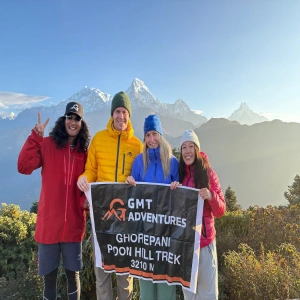
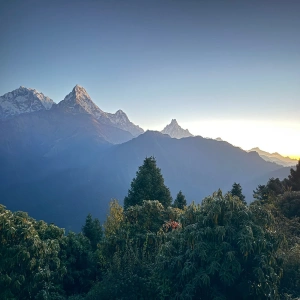
The Ghorepani Poon Hill Trek is one of Nepal’s most popular short Himalayan journeys, ideal for beginners and travelers with limited time. This 4–5 day teahouse trek takes you through charming Gurung and Magar villages, terraced farmlands, and lush rhododendron forests, leading to the famous Poon Hill viewpoint (3,210 m). From here, trekkers are rewarded with a spectacular sunrise panorama of Annapurna I, Annapurna South, Dhaulagiri, Machhapuchhre (Fishtail), and surrounding peaks.

The trek follows a well-established route with daily walks of 4–6 hours on stone steps and forest trails. Classified as easy to moderate, it requires no technical skills and is suitable for first-time trekkers and families with basic fitness. The best seasons are spring (March–May) for blooming rhododendrons and autumn (September–November) for clear mountain views.

Accommodation is in comfortable local teahouses with freshly prepared meals, while necessary permits include the Annapurna Conservation Area Permit (ACAP) and applicable trekking documentation. Along the way, trekkers experience rich local culture, warm hospitality, and scenic mountain landscapes. Safe, well-marked trails, optional guide support, and reliable infrastructure make the Ghorepani Poon Hill Trek an excellent introductory Himalayan trekking experience.

Major Highlights

  • Sunrise view from Poon Hill (3,210 m)

  • Panoramic views of Annapurna and Dhaulagiri ranges

  • Rhododendron forests and scenic mountain trails

  • Traditional Gurung and Magar villages

  • Comfortable teahouse trekking experience

  • Ideal trek for beginners and families

Why Choose This Trek?

The Ghorepani Poon Hill Trek is an ideal choice for travelers seeking a genuine Himalayan experience without committing to a long or physically demanding journey. Its short duration and well-developed trails make it perfect for beginners, families, and those with limited time, while still delivering some of the most spectacular mountain scenery in Nepal. The iconic sunrise from Poon Hill offers sweeping views of the Annapurna and Dhaulagiri ranges, rewarding trekkers with unforgettable panoramas after just a few days of walking.

Beyond the scenery, this trek stands out for its rich cultural experience and comfort. Walking through traditional Gurung and Magar villages, staying in welcoming teahouses, and experiencing local hospitality add depth to the journey. With moderate altitude, safe routes, and reliable facilities, the Ghorepani Poon Hill Trek combines natural beauty, cultural immersion, and accessibility—making it one of the best short treks in the Annapurna region.
Short Itinerary and Map

Ghorepani Poon Hill Trek Detailed Itinerary

Day 1

Arrival in Kathmandu and transfer to hotel.

Upon arrival at Tribhuvan International Airport, meet our representative and transfer to your hotel in Kathmandu. The remainder of the day is free for rest or exploring nearby areas.

Day 2

Drive from Kathmandu to Pokhara.

After breakfast, drive to Pokhara, Nepal’s beautiful lakeside city. Enjoy scenic views of rivers, hills, and terraced farmlands along the way.

Day 3

Drive from Pokhara to Nayapul and same day trek to Ulleri.

Drive from Pokhara to Nayapul, the starting point of the trek. Begin trekking through villages and farmland, followed by a steady uphill climb to Ulleri, a traditional Magar village.

Day 4

Trek from Ulleri to Ghorepani.

Today’s trek ascends through dense rhododendron and oak forests, passing Banthanti and Nangethanti. Enjoy occasional mountain views before reaching Ghorepani, a popular stop for trekkers heading to Poon Hill.

Day 5

Early morning hike to Poonhill and same day trek to Tadapani.

Start early for the hike to Poon Hill, one of the best viewpoints in the Annapurna region, offering stunning sunrise views of Dhaulagiri, Annapurna I, Annapurna South, Machhapuchhre, and Nilgiri. After returning to Ghorepani for breakfast, continue trekking through forest trails to Tadapani.

Day 6

Trek from Tadapani to Ghandruk Village and same day drive back to Pokhara

Descend through lush forests to Ghandruk, a picturesque Gurung village known for its traditional stone houses and mountain views. Explore the village and local culture before driving back to Pokhara.

Day 7

Drive from Pokhara to Kathmandu

Take a scenic drive back to Kathmandu, offering aerial views of rivers and Himalayan foothills. Transfer to your hotel upon arrival.

Day 8

Final departure to homeland

Transfer to Tribhuvan International Airport for your onward journey to your homeland, marking the end of the Ghorepani Poon Hill Trek.

Are you still confuse from where to start? GMT Adventures has solutions.

Cost Details

Included

1. Accommodation in Kathmandu

  • 2 nights hotel stay on B&B plan in Kathmandu and Pokhara.

2. Ground or Air Transportation (cost may differ as per personal preference)

  • All necessary ground transportation as per the itinerary, including Kathmandu–Pokhara–Kathmandu by tourist bus or private vehicle.

  • Domestic flight from Kathmandu - Pokhara - Kathmandu. 

3. Lodging and Meals During Trek

  • Accommodation in local lodges or teahouses along the trekking route.

  • Full board meals (Breakfast, Lunch, and Dinner) throughout the trekking period.

4. Permits and Fees

  • Annapurna Conservation Area Permit (ACAP).

  • TIMS Card (Trekkers’ Information Management System).

5. Guide and Porter

  • Experienced, licensed, and English-speaking trekking guide.

  • Porter support (shared between trekkers to carry main luggage).

  • Accidental insurance coverage for all Nepali staff (guides and porters).

6. Equipment

  • Group equipment including first-aid kits and basic emergency medical supplies.

7. Administration & Taxes

  • All applicable government taxes.

  • Company service charge.

8. Complimentary Items

  • GMT Adventures branded duffle bag (75 litre)

  • GMT Adventures branded cap

Note: The maximum baggage weight per person on the flight from Kathmandu - Pokhara - Kathmandu is 30 kg. Also, max weight to carry for each porter is 30 kg.

Excluded

1. International Airfare

  • Flights to and from Kathmandu.

2. Banking & Payment Charges

  • Wire transfer fees and bank service charges for payments made to the company’s bank account.

3. Food & Accommodation

  • Meals in Kathmandu and Pokhara (lunch and dinner).

  • Extra accommodation in Kathmandu or Pokhara due to early arrival, late departure, or unforeseen circumstances.

4. Emergency Services

  • Cost of rescue or evacuation services, including helicopter rescue if required (travel insurance strongly recommended).

5. Insurance

  • Personal travel insurance (mandatory; must cover trekking activities and emergency evacuation).

6. Personal Expenses

  • Telephone calls and internet/Wi-Fi.

  • Laundry services.

  • Hot showers (often charged extra at teahouses).

  • Cold drinks, mineral water, alcoholic beverages, bottled juice, and snacks.

  • Charging electronic devices.

  • Any other personal expenses not mentioned in the itinerary.

7. Personal Gear

  • Personal trekking equipment such as trekking boots, down jacket, sleeping bag, trekking poles, etc. (available for rent in Kathmandu or Pokhara).

8. Tips

  • Tips for trekking staff (guide and porters).

9. Extra Charges

  • Any additional services, activities, or costs not mentioned under “Included.”

Equipment Lists

Preparations for the 7-day Ghorepani Poon Hill Trek in Nepal: Necessary Gear and Equipment Checklist

The Ghorepani Poon Hill Trek is a moderate trek that requires normal gears. Here is a comprehensive list of necessary gear and equipment:

Head
+
  • Trekking Hat/Cap
  • Headlamp/Flashlight (with extra batteries), good quality
  • Sunglasses (UV protection)
  • Woolen hat /Beanie (for cold weather)
  • Insect Repellent (for lower trekking areas)
Upper Body
+
  • Base Layer Shirt: Two (moisture-wicking, breathable fabric)
  • Trekking Jacket: A pair of lightweight (water-resistant/windproof)
  • Insulating Layer: A pair (fleece, down jacket, or sweater for warmth)
  • Rain Jacket/poncho (lightweight, waterproof)
  • Trekking Trousers/Pants: Two pairs (comfortable and durable)
  • Long-sleeve shirt: 1 pair (for sun or insect protection)
  • Underwear: Two pairs (moisture-wicking, quick-dry fabric)
  • Compression Garments (for reducing muscle fatigue, optional)
  • Gore-Tex or a similar waterproof jacket
Lower Body
+
  • Trekking Pants: Two pairs (convertible into shorts if needed)
  • Thermal Leggings: one (for cold weather)
  • Shorts: Two (optional, for warmer weather)
  • Knee Guards/Support (for those who need extra knee protection)
  • Hands: Protect your hands with warm gloves
  • Light inner gloves (for lower-elevation trekking)
  • Insulated or down gloves (high-altitude trekking)
  • Waterproof gloves (wet season)
Foot Wear
+
  • Trekking Boots/Shoes (comfortable, waterproof, with good grip and ankle support)
  • Gaiters (to protect from mud, snow, or rocks entering boots)
  • Thick Socks: Two pairs (merino wool or synthetic, moisture-wicking)
  • Lightweight Socks: Two pairs (for warmer weather or layering)
  • Sandals/Flip-flops (for campsite/rest stops)
Sun Stuffs
+
  • Bandana/Buff (for dust and sun protection)
  • Sunblock (Sunscreen) (SPF 40 or higher)

Essential Information

Who, When, Altitude, and Daily Walking Hours

The Ghorepani Poon Hill Trek is suitable for beginners, first-time trekkers, families, and travelers with limited time who still want a classic Himalayan experience. The best time to trek is during spring (March–May), when rhododendron forests are in full bloom, and autumn (September–November), when weather conditions are stable with excellent mountain visibility. The maximum altitude reached is 3,210 meters at Poon Hill, making it a low-risk trek in terms of altitude sickness. The trek typically lasts 4 to 6 days, with an average of 4 to 6 hours of walking per day on well-defined trails.

Difficulty, Weather, And Fitness Preparation

The Ghorepani Poon Hill Trek is graded as easy to moderate, suitable for anyone with basic fitness, though trekkers should be prepared for frequent stone staircases and steady uphill sections. Weather conditions vary by season, with mild daytime temperatures and cooler mornings and evenings, especially at higher elevations like Ghorepani and Tadapani. Winter months can be cold, while monsoon season brings warmer temperatures and occasional rain. Basic physical preparation such as walking, light cardio exercises, stair climbing, or short hikes before the trek is sufficient to enjoy the journey comfortably.

Packing Essentials And Safety Support

Essential packing items include comfortable trekking boots, warm layered clothing, a waterproof jacket, sun protection, a reusable water bottle, and a small daypack for daily use. The trek is considered very safe, with regular villages and teahouse lodges along the route providing shelter and meals. Licensed guides carry basic first-aid kits, and emergency evacuation services are available if necessary, provided trekkers have appropriate travel insurance covering high-altitude trekking.

Permits And Cultural Experience

Trekkers must obtain an Annapurna Conservation Area Permit (ACAP) and a Trekkers’ Information Management System (TIMS) card, both of which are mandatory and usually arranged by the trekking company. Culturally, the trek offers rich experiences through traditional Gurung and Magar villages such as Ghandruk and Ghorepani, where trekkers can observe local lifestyles, enjoy warm mountain hospitality, and gain insight into the customs, traditions, and daily life of rural Himalayan communities.

Good to Know

Why Choose GMT Adventures for Ghorepani Poon Hill Trek?

Choosing GMT Adventures means trekking with a company that blends local expertise, professional expedition experience, and personal attention to every detail. CEO Gesman, who worked alongside Nims Purja during the 14 Peaks project, brings world-class high-altitude experience and expedition standards to every trek. From itinerary planning to guide selection and safety measures, every aspect is handled with professionalism, ensuring a smooth, safe, and memorable trekking experience.

GMT Adventures focuses on client comfort and satisfaction. With experienced guides, well-structured itineraries, transparent services, and hands-on management, the company ensures travelers can fully immerse themselves in the Himalayas while leaving logistics, safety, and support to the professionals. Trekking with GMT Adventures guarantees a seamless, high-quality, and rewarding Everest journey.

Personalized Journeys Made Simple with GMT Adventures

Customization is essential because every traveler has unique preferences, fitness levels, schedules, and expectations, which can greatly influence the overall trekking experience. By allowing adjustments in pace, itinerary, accommodation standards, or rest days, each journey can be tailored to ensure maximum comfort, safety, and enjoyment. With GMT Adventures, this flexibility is fully supported, allowing trekkers to design an adventure that aligns perfectly with their personal needs and goals. Personalized planning ensures that every experience is not only memorable but also fully adapted to the traveler’s individual preferences, making each journey both rewarding and stress-free.
 

What Our Guests Say?

Need Help? Call Us+977 9823373306