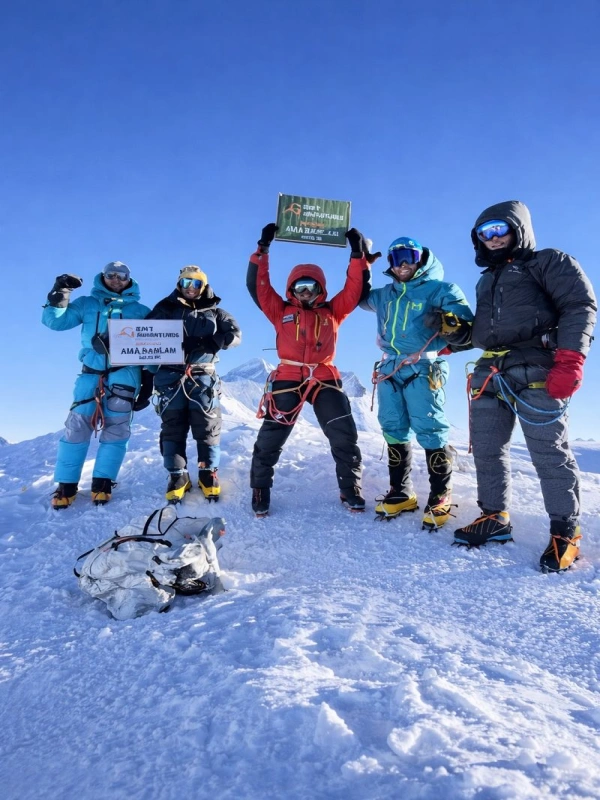
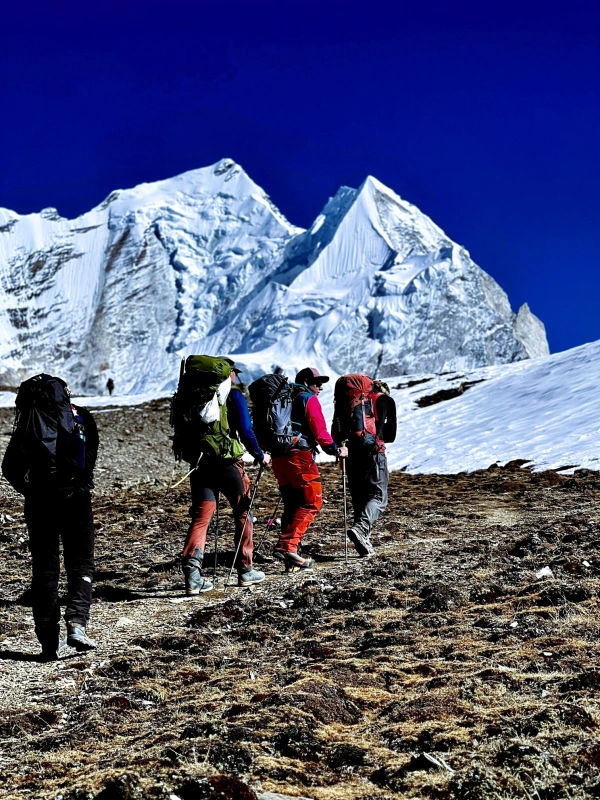
The Baruntse Expedition is a premier 7,000-meter mountaineering objective located in the heart of the Khumbu region, tucked between the giants of Mt. Everest, Mt. Lhotse, and Mt. Makalu. Standing at 7,129m, it serves as an ideal "stepping stone" for climbers aspiring to tackle 8,000m peaks. The journey begins with a trek through the remote Hinku Valley, offering a mix of lush rhododendron forests and stark alpine landscapes, before transitioning into a technical climb along the mountain's southeast ridge.
Mount Baruntse (7,129m) is an exquisitely symmetrical snow peak located in the heart of the Khumbu region, framed by the massive walls of Mt. Everest, Lhotse, and Makalu. First climbed by a New Zealand team in 1954, it remains one of the most accessible and popular 7,000-meter peaks in Nepal. The expedition offers a pure alpine experience, combining a remote approach through the Hinku Valley with a technical ascent that provides a true sense of high-altitude mountaineering without the extreme crowds of the 8,000-meter giants.
The Climbing Challenge
The climb is categorized as Alpine Grade AD+ (Assez Difficile Plus). The ascent primarily follows the Southeast Ridge, where you will face sustained snow and ice slopes of 40° to 55°. The most demanding section is the summit day, which features a prominent ice cliff and a long, exposed ridge line that requires about 10–12 hours of focused effort. It is the ultimate "stepping stone" to 8,000-meter peaks, requiring proficiency in fixed-rope climbing and crampon work.
Acclimatization Strategy
Safety on Baruntse is dictated by the "Climb High, Sleep Low" philosophy. The 10-day approach through the Hinku Valley is a slow, deliberate march to help your body adapt to the thinning air. Once at Base Camp (5,400m), the "Rotation Phase" begins. You will move gear to Camp I (6,100m) and Camp II (6,400m), often sleeping there for a night before descending back to Base Camp. This "yoyo" method triggers the production of red blood cells, ensuring you are physically primed for the final summit push.
Landscape & Culture
This expedition is a journey of contrasts. You begin in the lush, temperate forests of the Makalu Barun National Park, home to the elusive Red Panda and high-altitude rhododendrons. As you ascend, the greenery vanishes, replaced by the stark, lunar beauty of the Hinku and Honku glacial valleys. Along the way, you pass ancient Sherpa settlements and the 200-year-old Lungsumgba Gompa, where it is traditional to offer prayers for a safe and successful climb.
Trip Highlights
The "Grand Circle" Views: Behold an unparalleled panorama of Everest, Lhotse, and Makalu—three of the world’s five highest mountains—directly from the summit.
Technical Summit: Successfully navigate the 7,129m peak, mastering steep ice sections, fixed ropes, and exhilaratingly narrow ridgelines.
Amphu Lapcha Pass: Conquer the technical 5,845m Amphu Lapcha, a high-altitude pass that requires technical rigging and provides a thrilling exit into the Khumbu Valley.
Wilderness Approach: Trek through the isolated and pristine Hinku Valley, a route that offers much more solitude and raw natural beauty than the standard Everest trails.
Sacred Glacial Lakes: Set up camp beside the emerald-white waters of Seto Pokhari, a remote and sacred high-altitude lake hidden deep within the Honku Basin.
Itinerary and Map
Day 1
Arrival in Kathmandu
Upon your arrival at Tribhuvan International Airport, you will be greeted and transferred to your hotel. The day is yours to recover from your flight and enjoy the vibrant atmosphere of Thamel.
Max. Altitude: 1,400m (4,593ft)Duration: 30 min driveDistance: 6 kmMeals: Welcome DinnerAccommodation: HotelMode of Transportation: Private Vehicle
Day 2
Rest Day in Kathmandu, Briefing & Preparation
A critical day for logistics. You will meet your expedition leader, undergo a formal briefing regarding the climb, and perform a final check of your high-altitude gear. Any missing equipment can be rented or bought today.
Max. Altitude: 1,399m (4,589ft)Meals: BreakfastAccommodation: Hotel
Day 3
Flight to Lukla & Trek to Chutanga
An early morning flight takes you to the world’s most famous mountain airstrip. After meeting your porter crew, you begin the trek eastward, away from the main Everest trail, ascending through rhododendron forests to the summer pastures of Chutanga.
Max. Altitude: 3,060m (10,039ft)Duration: 35 min flight / 4 hrs trekDistance: 6 kmMeals: Breakfast, Lunch, DinnerAccommodation: Tea House / LodgeMode of Transportation: Flight
Day 4
Chutanga to Thuli Kharka via Zatrawa La Pass
This is a challenging day. You cross the Zatrawa La (4,610m), which provides the first real taste of altitude. The trail then descends into the Hinku Valley to reach Thuli Kharka.
The trail descends through high-altitude forests of pine and oak. You’ll enjoy stunning views of Peak 43 and Kusum Kanguru as you reach the Hinku River and follow it to the village of Kothe.
As you head north, the valley widens. You pass the 200-year-old Lungsumgba Gompa and witness the massive impact of the Dig Kharka glacier. The views of Mera Peak start to dominate the skyline.
The trek climbs alongside the lateral moraine of the Dig Glacier. The terrain becomes more rugged and alpine as you reach Khare, the base for Mera Peak climbers and a vital stop for Baruntse teams.
A day dedicated to "Climb High, Sleep Low." You will likely hike to a nearby ridge to aid red blood cell production. It is also a day for practicing knot-tying and fixed-rope techniques.
A relatively flat but long trek through the high-altitude valley floor. You pass several glacial lakes, including the "White Lake" (Seto Pokhari), surrounded by Chamlang and Baruntse.
During this week, the team performs rotations to acclimatize and ferry gear. You will climb to Camp I (6,100m) on the West Ridge and Camp II (6,400m), returning to Base Camp for recovery.
The window of opportunity. Once the weather is clear, the team moves from BC to Camp I, then Camp II. From Camp II, you make the final push to the summit (7,129m) and descend back to Base Camp.
Descending further into the Khumbu region, the air becomes thicker and the landscape greener. You will stay in Tengboche, home to the region’s largest monastery.
The trail drops to the Phunki Tenga river before climbing back up to the "Sherpa Capital," Namche Bazaar. Enjoy your first hot shower and bakery treats in weeks.
Airport Transfers: International and domestic airport pick-up and drop-off services via private vehicles with professional assistance.
Kathmandu Accommodation: Four (4) nights of stay in Kathmandu on a single occupancy basis including daily breakfast.
Welcome & Farewell Dinner: Traditional Nepali dinners in Kathmandu with the expedition office team.
Cargo Assistance: Full assistance for expedition cargo clearance at Nepal Customs (Client covers duties).
2. Permits, Fees & Government Regulations
Expedition Permits: Mount Baruntse climbing permit, royalty fees, and local entry fees for Pasang Lhamu Rural Municipality.
National Park Fees: Entry permits for both Sagarmatha National Park and Makalu Barun National Park.
Liaison Officer: Full salary, meals, accommodation, transport, and equipment for the government-authorized Liaison Officer.
Environmental Management: All garbage management charges, stool shipment transfer services, and required environmental deposit fees.
Certificates: Official Expedition Certificate issued by the Ministry of Culture, Tourism, and Civil Aviation (MoCTCA) post-summit.
3. Transportation & Luggage
Domestic Flights: Round-trip flights between Kathmandu and Lukla including all airport taxes.
Cargo & Logistics: Air cargo from Kathmandu to Lukla; porter or yak transport for all expedition equipment and supplies to and from Base Camp.
Personal Luggage: Up to 60 kg of personal baggage per member carried by porters or yaks during the trekking approach.
4. Trekking & Base Camp Services
Trek Full Board: Three daily hygienic meals (B/L/D) with tea/coffee and accommodation in the best available lodges/tea houses along the route.
Base Camp Full Board: Comprehensive service including nutritious meals, fresh produce (vegetables, meat, fruits), and a variety of beverages.
BC Infrastructure: Personal high-quality tents for members (with mattress/pillow), plus fully equipped dining, kitchen, communication, toilet, and shower tents.
Base Camp Comforts: Heating in common areas and solar/generator power for charging laptops, phones, and other electronic devices.
5. Expedition Staff & Support
Professional Staff: Experienced Base Camp cooks, kitchen helpers, and dedicated porters.
Staff Welfare: All wages, insurance, food, accommodation, equipment, and clothing for Nepalese staff and porters are fully covered.
Staff Insurance: Medical and emergency rescue insurance for all local guides, cooks, and porters.
6. Climbing Support & High-Altitude Logistics
Personal Climbing Guide: One (1:1 ratio) government-licensed, experienced high-altitude climbing guide per member for rotations and summit push.
Climbing Assistance: Guide support for carrying gear and assisting during high-altitude rotations.
High Camp Infrastructure: Shared high-altitude tents (2 members per tent), cooking gas, and specialized high-altitude food.
Technical Equipment: Group climbing gear, including fixed and dynamic ropes.
Rope Fixing Team: Professional team to establish and maintain the route safety.
7. Safety, Communication & Training
Pre-Climb Training: On-site training at Base Camp covering oxygen systems, mask/regulator usage, and ice climbing techniques.
Weather Services: Professional, regular weather forecast updates for summit planning.
Communication Systems: Satellite phone and walkie-talkie sets provided (including all legal communication permits) for coordination between camps.
Medical Support: Comprehensive medical kit at Base Camp and emergency oxygen cylinders (mask and regulator) available for safety.
Excluded
1. Travel & Entry Requirements
International Airfare: Flight tickets to and from your home country to Kathmandu.
Nepal Entry Visa: Fees for the tourist visa (approx. USD 125 for 90 days), which must be obtained independently.
Medical & Rescue Insurance: Mandatory comprehensive insurance covering high-altitude medical treatment, emergency helicopter evacuation, trip cancellation, and repatriation.
2. Kathmandu Expenses
City Meals: Lunch and dinner in Kathmandu (except for the scheduled welcome/farewell dinners). This also applies in the event of an early return from the mountains.
Extra Accommodation: Any additional nights in Kathmandu due to early arrival, late departure, early expedition completion, or domestic flight delays.
3. Personal Equipment & Gear
Climbing Hardware: Personal technical gear including harness, crampons, helmet, ice axe, ascender (Jumar), and descender.
High-Altitude Clothing: Personal mountaineering apparel, down suits/jackets, and professional climbing boots.
Trekking Gear: Personal sleeping bags, trekking poles, and daily wear.
Toiletries: Personal hygiene items such as soap, shampoo, toothpaste, and specialty toilet paper.
4. Personal Expenses & Comforts
Communication: Personal internet usage, international phone calls, and satellite communication charges outside the team's standard setup.
Trek Comforts: Hot showers, laundry services, and battery charging fees at tea houses during the trekking phase.
Beverages & Snacks: All soft drinks, alcoholic beverages, bottled water, and personal snacks (energy bars, chocolates) purchased during the trek or in Kathmandu.
5. Bonuses & Gratuities
Summit Bonus: Mandatory bonus for your personal Climbing Guide (Minimum recommended: USD 1,200).
Staff Tips: Gratuities for Base Camp staff, kitchen crew, and porters (Minimum recommended: USD 350 per member).
6. Specialized Permits & Extras
Media Permits: Special fees and permits for professional filming, drones, or commercial photography/videography.
Unforeseen Costs: Any expenses arising from itinerary changes, natural disasters, or services not explicitly listed in the "Cost Includes" section.
Equipment Lists
The Baruntse expedition demands careful preparation and high-quality mountaineering equipment. Proper gear plays a vital role in ensuring safety, efficiency, and a successful summit. Below is the recommended equipment list for the Baruntse expedition.
A Baruntse expedition requires a specific set of legal documents. You must obtain a climbing permit from the Nepal Mountaineering Association (NMA), which varies in price depending on the season (Spring is generally more expensive than Autumn). Additionally, because the route passes through the Makalu-Barun National Park, an entry permit is mandatory. Lastly, a TIMS (Trekkers' Information Management System) card is required for the trekking approach. These are typically managed by your expedition agency, but you must provide a valid passport and several passport-sized photos.
Insurance Requirements
Standard travel insurance is insufficient for this trip. You must secure comprehensive mountaineering insurance that specifically covers high-altitude rescue and evacuation up to 7,500m. It should include helicopter evacuation costs and medical expenses. Ensure your policy does not have an "altitude cap" that excludes technical climbing, as many standard policies stop coverage at 4,000m or 6,000m.
Communication and Connectivity
In the remote Hinku and Honku valleys, mobile network coverage is extremely limited or non-existent. At Base Camp, most teams use satellite phones (Thuraya or Iridium) for emergency communication and weather updates. While some tea houses on the trek-in offer Wi-Fi (often via Everest Link), it becomes unreliable as you go higher. It is highly recommended to carry a personal Garmin inReach or similar GPS messenger for personal check-ins.
Tips and Gratuities
Tipping is a deeply ingrained part of the Nepalese trekking and climbing culture. It is customary to provide a collective tip for the kitchen staff and porters at the end of the trek. For the Climbing Sherpas, a "Summit Bonus" is standard practice if you reach the top, or a "Participation Bonus" if the summit is not reached due to weather. Budgeting approximately 10% to 15% of your total trip cost for tips is a good rule of thumb.
Good to Know
Technical Proficiency
Baruntse is not a "walk-up" peak. You should be comfortable with fixed-rope techniques, using a jumar (ascender) for steep inclines and a figure-eight or ATC for rappelling (abseiling). Familiarity with walking in 12-point crampons on blue ice and snow slopes of up to 55° is essential. If you haven't used these tools recently, the acclimatization day at Khare (Day 8) is your final opportunity to practice before hitting the technical West Col.
The "Puja" Ceremony
Before any climbing begins at Base Camp, a Puja ceremony is held. This is a sacred Buddhist ritual where a Lama blesses the climbers and their equipment (ice axes, crampons, and helmets). It is considered bad luck to step onto the mountain before the Puja is completed. Participating in this ceremony is a profound cultural experience and a great way to bond with your Sherpa team.
Physical & Mental Resilience
Beyond physical fitness, mental toughness is the deciding factor on Baruntse. You will spend over two weeks living in tents, often in sub-zero temperatures, dealing with high winds and the physical toll of thin air. The ability to remain patient during "rest days" or while waiting for a weather window is just as important as your climbing ability. Developing a "slow and steady" mindset will help you conserve energy for the 12-hour summit day.
Dietary Needs at Altitude
As you ascend, your appetite will naturally decrease, but your caloric needs will skyrocket. Base Camp meals are usually high in carbohydrates (pasta, rice, potatoes). However, at High Camps, many climbers find "real food" difficult to digest. Bringing a supply of your favorite high-energy snacks, energy gels, or electrolyte powders from home can provide a much-needed morale boost and a quick source of fuel when your body rejects heavy meals.