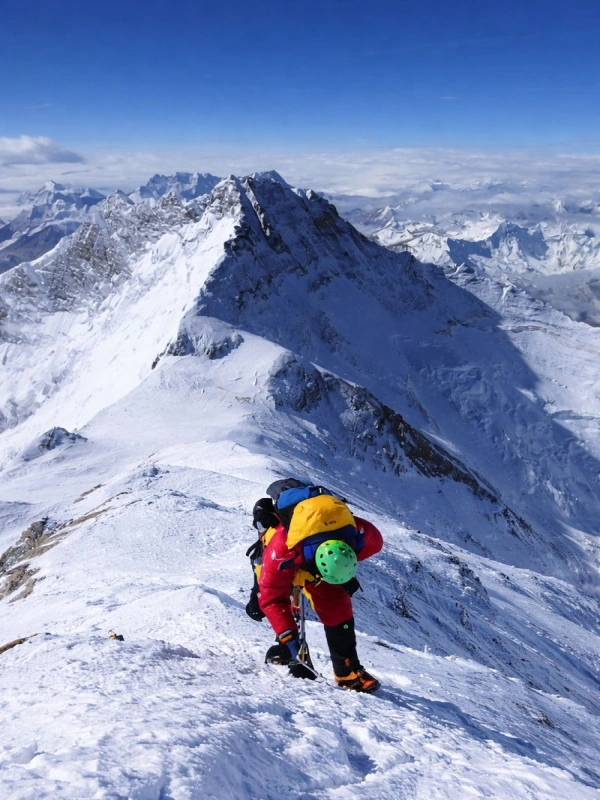
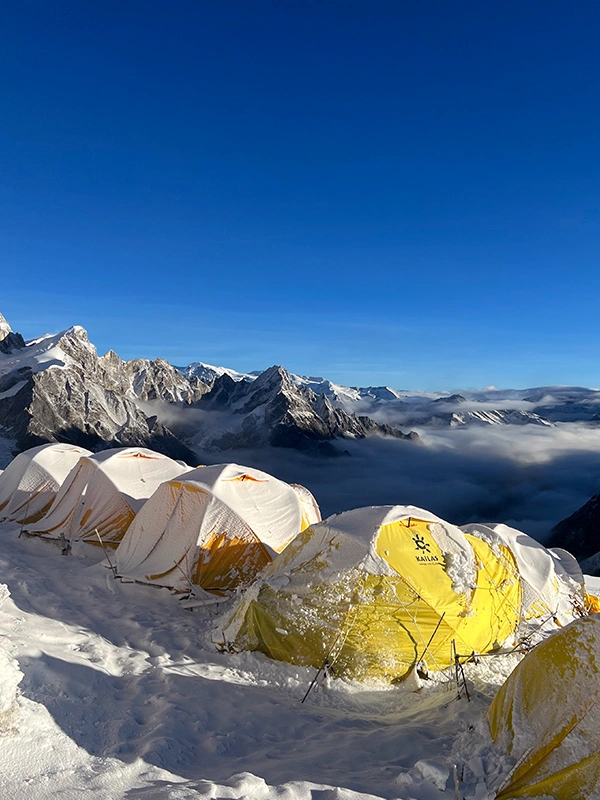
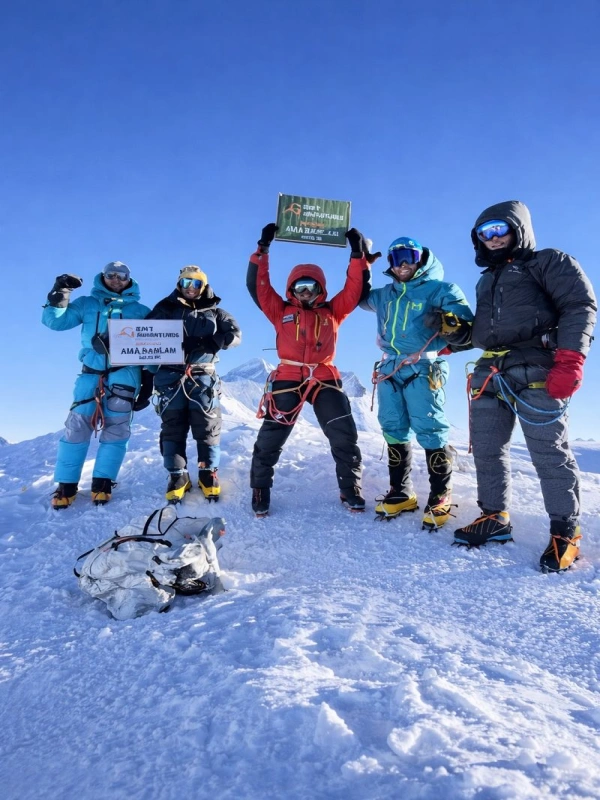
Kanchenjunga is the third-highest mountain in the world and is notoriously difficult due to its remote location and technical complexity. Unlike the more crowded Everest, this expedition offers a raw, wilderness experience. The journey traverses the lush Taplejung region, moving from subtropical forests to the massive glaciers of the Yalung face. It is a peak of deep spiritual significance, and out of respect for local traditions, climbers often stop just a few feet short of the actual summit.
Trip Facts
Trip Grade
Very Strenuous
Country
Nepal
Maximum Altitude
8586m
Group Size
2-10 Climbers
Starts
Kathmandu
Ends
Kathmandu
Activities
8,000m Mountaineering, Exploration
Best Time
Spring (Late April–May)
Kanchenjunga, which translates from Tibetan as the "Five Treasures of the Great Snow," refers to the five distinct summits of the massif. These treasures are traditionally believed to be the five repositories of God: Gold, Silver, Gems, Grain, and Holy Books. The mountain is not just a peak but a massive cross-shaped fortress that straddles the border of Nepal and the Indian state of Sikkim, acting as the sentinel of the Eastern Himalayas. Kanchenjunga is a massive mountain massif, not just a single peak. The expedition focuses on the Main Peak via the South Face route. Because the approach is so long and the mountain so high, this is a 55-day commitment. It is widely considered more difficult than Everest due to the length of the summit day and the technicality of the "Upper Icefall" sections.
The Climbing Challenge
This is a Grade V (Extreme) high-altitude climb. The route involves steep mixed climbing on rock, snow, and ice. The "Great Shelf" and the final summit pyramid require high-level technical skill and the ability to climb at gradients of 50° to 60° in the "Death Zone" (above 8,000m). The weather in Eastern Nepal is also more volatile, with higher precipitation and moisture from the Bay of Bengal.
Acclimatization Strategy
Due to the extreme altitude, the itinerary includes multiple acclimatization days even before reaching Base Camp (at Yamphudin and Tseram). Once at Base Camp (5,143m), the 23-day Rotation Period is crucial. You will perform multiple "load ferries" and sleep at Camp I (6,200m) and Camp II (6,400m) to prepare your lungs for the push to Camp IV (7,500m) and the summit.
Landscape & Culture
The trek passes through the heart of Limbu and Rai culture. Unlike the Khumbu, where Sherpa culture dominates, here you will see traditional terraced farming and unique architecture. As you rise, the landscape transforms from cardamom plantations to rhododendron forests, eventually becoming a world of hanging glaciers and towering granite walls.
Trip Highlights
The Third Highest: Stand near the pinnacle of the 8,586m giant, a feat achieved by very few mountaineers globally.
Remote Yalung Face: Explore the isolated South Face Base Camp, offering a pristine environment far from commercial trekking crowds.
Flora & Fauna: Trek through the Kanchenjunga Conservation Area, home to the Red Panda, Snow Leopard, and rare Himalayan orchids.
Glacial Mastery: Navigate the complex and shifting glaciers between Camp II and Camp IV.
Pancha Chuli Views: Witness the incredible "Five Peaks" of the Kanchenjunga massif that straddle the border of Nepal and Sikkim.
Itinerary and Map
Day 1
Arrival in Kathmandu & Transfer to Hotel
After arriving at Tribhuvan International Airport, you will be escorted to your hotel. This evening serves as your first introduction to the team with a traditional welcome dinner and a briefing on the long journey ahead.
Max. Altitude: 1,400m (4,593ft)Duration: 30 min driveDistance: 6 kmMeals: Welcome DinnerAccommodation: HotelMode of Transportation: Private Vehicle
Day 2
Expedition Briefing & Preparation
A full day dedicated to final logistical checks. You will finalize your permits with the Department of Tourism, attend a detailed expedition briefing, and have the opportunity to buy or rent specialized high-altitude gear in Thamel.
Max. Altitude: 1,400m (4,593ft)Duration: Full DayMeals: BreakfastAccommodation: Hotel
Day 3
Flight to Bhadrapur & Drive to Phidim
The journey begins with a 45-minute flight to the hot plains of Bhadrapur. From here, a scenic drive leads you upward into the cool, green hills of the Panchthar district, passing through extensive tea gardens and hilly roads.
Max. Altitude: 1,200m (3,937ft)Duration: 45 min flight / 6 hrs driveDistance: 155 km (Drive)Meals: B/L/DAccommodation: Local Lodge / HotelMode of Transportation: Plane & Private Jeep
Day 4
Drive from Phidim to Yamphudin
This is a rugged day of travel on mountain roads. The drive follows the Kabeli Khola river and winds through remote villages where life has remained unchanged for centuries, ending at the trekking gateway of Yamphudin.
Max. Altitude: 2,080m (6,824ft)Duration: 7-8 hrs driveDistance: 85 km (Drive)Meals: B/L/DAccommodation: Tea HouseMode of Transportation: Private Jeep
Day 5
Acclimatization Day at Yamphudin
A vital rest day to adjust to the 2,000m mark. You will take a short hike to explore the local Limbu and Sherpa culture, ensuring your body is ready for the significant elevation gain starting tomorrow.
The first true day of trekking is strenuous. You will ascend steeply through dense rhododendron and bamboo forests, crossing the Lasiya Bhanjyang pass before descending to the forest clearing of Tortong.
The trail follows the Simbuwa Khola river upstream through sub-alpine forests of pine and fir. As the valley narrows, the peaks of the Kanchenjunga massif begin to appear, eventually reaching the hamlet of Tseram.
To trigger red blood cell production, you will hike up to the summer pastures of Ramche. This provides breathtaking views of the Yalung Glacier before returning to Tseram for the night.
Max. Altitude: 4,580m (15,026ft)Duration: 5 hrs hikeDistance: 7 km (Round Trip)Meals: B/L/DAccommodation: Tea House / Tented Camp
Day 9
Additional Acclimatization Day at Tseram
Kanchenjunga is an 8,000m giant; an extra day here is essential. You will rest, perform light stretches, and check equipment while your body adapts to the nearly 4,000m elevation.
Following the terminal moraine of the Yalung Glacier, you ascend into a barren, alpine world. You will pass the Oktang viewpoint, a sacred spot where you can see the massive southwest face of Kanchenjunga towering above you.
Leaving the last permanent structures behind, you move onto the lateral moraine of the glacier. The path becomes a maze of rock and ice; Middle Camp serves as a high staging ground to prevent excessive fatigue before reaching Base Camp.
The final approach to your "home" for the next month. South Base Camp is established in a safe zone on the glacier with direct views of the climbing route. Our team will have the kitchen and communication tents fully operational.
This 23-day window is for gear ferrying and acclimatization. You will climb steep snow slopes to Camp I (6,200m), navigate the technical ice of Camp II (6,400m), and establish Camp III (7,100m) on the Great Shelf.
Once the weather window opens, you move to Camp IV (7,500m). The summit day is a test of will, navigating the couloir and final rocky towers to reach the third-highest point on Earth.
A day of environmental responsibility. The team stripping the mountain of all tents and waste to ensure the Yalung Glacier remains as pristine as when you arrived.
Max. Altitude: 5,143m (16,873ft)Duration: Full DayMeals: B/L/DAccommodation: Tented Camp
Day 47
Trek from Base Camp to Ramche
Leaving the high glacier, you descend rapidly down the lateral moraine. As you reach the lower pastures of Ramche, you will notice the air becoming significantly richer, making breathing and movement much easier.
You continue the descent past Tseram and back into the forest zone. The trail follows the Simbuwa Khola downward through lush rhododendron and conifer forests, offering a welcome change from the stark white of the glacier.
The final major day of high-altitude trekking. You will climb back up to cross the Lasiya Bhanjyang pass before descending to the permanent village of Yamphudin, where you can enjoy your first real "village" comforts in weeks.
Retreating into the lower hills, the trail moves through vibrant terraced fields and Limbu villages. The scenery is a beautiful mix of cardamom plantations and small waterfalls.
The final day of trekking. A relatively gentle walk through the lower subtropical hills leads you to the village of Khandengba, completing your circular journey.
A short walk to the road-head followed by a long, 8-hour scenic drive. You descend back to the tropical warmth of the Terai plains in Bhadrapur.
Max. Altitude: 90m (295ft)Distance: 140 km (Drive)Meals: B/L/DAccommodation: Hotel
Day 53
Flight from Bhadrapur to Kathmandu
A morning flight returns you to the capital. After checking into the hotel, the rest of the day is yours for a hot shower, rest, and a celebratory farewell dinner.
Max. Altitude: 1,350m (4,429ft)Meals: Breakfast & DinnerAccommodation: Hotel
Day 54
Rest Day in Kathmandu
A buffer day to account for any flight delays or simply for last-minute souvenir shopping in Thamel or relaxing.
Max. Altitude: 1,350m (4,429ft)Meals: BreakfastAccommodation: Hotel
Day 55
Final Departure
Transfer to the airport for your international flight home.
Max. Altitude: 1,401m (4,596ft)Meals: Breakfast
Are you still confuse from where to start? GMT Adventures has solutions.
Airport Transfers: International and domestic airport pick-up and drop-off services via private vehicles with professional assistance.
Kathmandu Accommodation: Four (4) nights of stay in Kathmandu on a single occupancy basis including daily breakfast.
Welcome & Farewell Dinner: Traditional Nepali dinners in Kathmandu with the expedition office team to introduce local culture.
Cargo & Logistics Support: Full assistance with expedition cargo clearance at Nepal Customs (Client covers applicable duties).
2. Permits, Fees & Government Regulations
Expedition Permits: Government expedition royalty and climbing permits for Mt. Kanchenjunga.
Restricted Area Permits: Mandatory Restricted Area Entry Permits and all associated local fees.
Liaison Officer: One authorized Government Liaison Officer, including salary, food, accommodation, transport, and equipment.
Environmental Management: Garbage deposit and waste management fees, including stool shipment and responsible disposal services.
Certificates: Official Mt. Kanchenjunga Climbing Certificate issued by the Ministry of Culture, Tourism & Civil Aviation (MoCTCA) upon a successful summit.
3. Transportation & Luggage
Domestic Flights: Round-trip domestic flights between Kathmandu and Bhadrapur as per the itinerary.
Land Transportation: All Jeep transfers between Bhadrapur, Phidim, Yamphudin, and Tapetok.
Expedition Cargo: Truck transport for all heavy equipment from Kathmandu to Yamphudin; porter or pack animal transport from Yamphudin to Base Camp.
Member Baggage Allowance: Up to 60 kg of personal baggage per member during the trek and expedition, carried by porters or pack animals.
4. Trekking & Base Camp Services
Trek Full Board: Three daily hygienic meals (B/L/D) with tea and coffee; accommodation in the best available hotels/lodges during the trekking phase.
Base Camp Full Board: Comprehensive service including nutritious meals (fresh vegetables, meat, fruits) and beverages (soft drinks, juices), supplied regularly.
BC Infrastructure: Individual box tent for each member, plus fully equipped dining, kitchen, communication, toilet, and shower tents.
Base Camp Comforts: Heaters in dining and common tents; solar panels and generators for lighting and charging electronic devices (laptops, phones).
5. Expedition Staff & Support
Professional Staff: Experienced Base Camp cook and kitchen helpers to manage high-quality meal preparation and logistics.
Staff Welfare: All wages, insurance, food, accommodation, transport, clothing, and allowances for Nepalese staff and porters are fully covered.
Maps & Equipment: Provision of detailed trekking/climbing maps, a GMT-branded expedition duffle bag, and a cap for each member.
6. Climbing Support & High-Altitude Logistics
Personal Climbing Guide: One (1:1 ratio) government-licensed, highly experienced high-altitude Guide per member for all rotations and the summit push.
Climbing Assistance: Sherpa support for carrying personal climbing gear and equipment to high camps.
High Camp Services: Shared high-altitude tents (2 members per tent), cooking gas, utensils, and high-energy food supplies.
Technical Equipment: Group climbing gear, including fixed and dynamic ropes, with route-fixing services provided by an expert team.
7. Oxygen, Safety & Training
Oxygen System: 3 oxygen cylinders (4L) per member and 1 cylinder for the Guide, including masks and regulators (to be returned after the expedition).
Safety Training: Pre-climb training at Base Camp covering oxygen usage, mask/regulator handling, and ice wall/ladder techniques.
Medical Support: Comprehensive medical kit available at Base Camp for members and staff; backup oxygen systems (cylinder/mask) kept at BC for emergencies.
Communication & Weather: Walkie-talkies for camp-to-camp coordination; emergency satellite phone (usage at extra cost); and professional weather forecasts from Meteotest, Switzerland.
Excluded
Here is the categorized Cost Excludes section for your Kanchenjunga Expedition (8,586m), organized to match the professional format used for your Baruntse details.
1. International Travel & Entry Requirements
International Airfare: Round-trip flight tickets to and from Kathmandu are not included.
Nepal Entry Visa Fee: Fees for the tourist visa are excluded.
Note for 2026: The current visa fee for a 90-day multiple-entry tourist visa is USD 125 per person, payable in cash (clean USD notes) upon arrival at Tribhuvan International Airport.
Banking Charges: All wire transfer fees, bank service charges, and international transaction costs related to expedition payments must be covered by the client.
2. Meals & Accommodation in Kathmandu
City Meals: Lunch and dinner in Kathmandu are excluded (except for the scheduled Welcome/Farewell dinners).
Additional Stays: Any extra hotel nights in Kathmandu due to early arrival, late departure, flight delays, or early return from the expedition will be charged separately.
3. Personal Equipment & Gear
Climbing Hardware: Personal technical equipment such as high-altitude boots, harness, crampons, ice axe, and ascender/descender devices.
High-Altitude Clothing: Down suits, GORE-TEX layers, and specialized mountaineering apparel.
Personal Sleeping Gear: Sleeping bags, liners, and personal accessories for high-altitude camps.
Toiletries: All personal care items including soap, shampoo, toothpaste, and hygiene supplies.
4. Personal Expenses & Comforts
Communication: Personal satellite phone calls, private internet/Wi-Fi charges, and international telephone calls.
Refreshments: Alcoholic beverages, specialty coffees (espresso/latte), soft drinks, and bottled/canned beverages during the trek and at Base Camp.
Trek Services: Fees for laundry, hot showers, and battery/electronic device charging at lodges during the approach.
5. Summit Bonuses & Mandatory Tips
Expedition Leader Bonus: Mandatory summit bonus for the Expedition Leader (Minimum: USD 2,000).
Staff Gratuities: Mandatory tips for local staff, payable in cash at the end of the trip:
Porters: Minimum USD 200 per member.
Base/High Camp Staff: Minimum USD 400 per member.
6. Specialized Permits & Extras
Media Permits: Fees for special filming, professional photography, media production, or drone permits as required by Nepalese law.
Unforeseen Expenses: Costs arising from itinerary changes due to weather, health issues, government regulations, or force majeure.
Miscellaneous: Any service or activity not explicitly listed in the "Cost Includes" section.
Equipment Lists
The Kanchenjunga expedition calls for elite-level preparation and world-class mountaineering equipment. Facing one of the most formidable and remote 8000-meter giants, the right gear is essential to ensure safety, resilience, and summit success. Below is the recommended equipment list for the Kanchenjunga expedition.
Head
+−
Sun Cap
Dessert Cap
Balaclava
Fleece/Warm Hat
Neck Gaiter.
Upper Body
+−
Thermal base layer tops
Fleece jackets
Gore-Tex jacket
Warm Jacket
Wind-proof jacket(s)
Down jacket(s)
Quick-dry T-shirts (Full-sleeve recommended)
Hands
+−
Thin Fleece gloves
Wind stopper/screen tap gloves
Heavy guide gloves
Summit gloves – 8000 m
Lower Body
+−
Thermal base layer bottoms
Fleece trousers
Gore-Tex pants
Heavy weignt pants
Mid-weight trekking pants
Lightweight quick-dry trekking pants
Gaiters for trekking boots
Down pants
Underwear
Foot Wear
+−
Summit boots – 8000m
Climbing boots – 6000m
Summit socks – 8000m (4 pairs)
Regular trekking socks (3-4 pairs)
Gore-Tex trekking shoes
Camp booties (1 pair)
Slippers (1 pair)
Travel Documents
+−
Valid passport (with a minimum of 6 months' validity)
Insurance paper and contact address
Sun Stuffs
+−
Sun cream up to SPF 50
Lip guard SPF 30 to 50
UV-protected sunglasses
Lotion or moisturizer
Hand and Toe warmer
Toiletries
+−
Toilet paper and/or wet wipes
Toothpaste and toothbrush
Soap and shampoo
Towel and garbage bag
Eating & Drinking
+−
1-liter water bottle (Nalgene, BPA/BPS-free)
1 to 1.5-liter thermos
Sleeping Bags
+−
Down sleeping bag (-40 degrees)
Sleeping bag for base camp (optional)
Air mattress inflatable (Single)
Therma rest Z lite mattress
Inflatable pillow
Bag Packs
+−
Rucksack (45L–55L)
Duffel bag (120L–150L)
Waterproof stuff sacks or dry bags
Climbing Equipments
+−
Summit down suit (8000m)
Climbing helmet
Crampons (12-pointed crampons with anti-balling plates steel made)
1 pair Ice axe with spike and protector (depending on the climber’s height)
Comprehensive first aid kit (bandages, gauze, adhesive tape)
Pain relief and anti-inflammatory medication
Miscellaneous
+−
Nail cutter
Umbrella or rain poncho
Hot water bag
Travel charger, earbuds
Powerbank
Spare batteries (e.g. Energizer Ultimate Lithium)
Personal pee bottle
Essential Information
Special Permits and Group Requirements
Kanchenjunga is located in a restricted area near the borders of India (Sikkim) and China (Tibet). To climb here, you must have:
Expedition Permit: Issued by the Department of Tourism.
Restricted Area Permit (RAP): Mandatory for the Taplejung region.
Kanchenjunga Conservation Area Permit (KCAP): Required for environmental protection.
Group Rule: Regulations require a minimum of two climbers per group accompanied by a licensed Nepalese guide. Solo expeditions are strictly prohibited in this region.
Rescue and High-Altitude Insurance
This is one of the most remote mountains in the world. Your insurance must be a specialized mountaineering policy that covers:
Helicopter Evacuation: Coverage up to 8,000m+ (standard trekking insurance only goes to 6,000m).
SAR (Search and Rescue): Because of Kanchenjunga’s isolation, a rescue mission can cost upwards of $15,000–$20,000.
Medical Repatriation: Coverage for high-altitude pulmonary or cerebral edema (HAPE/HACE) treatment in Kathmandu or your home country.
Logistics and Remote Connectivity
Unlike the Everest region, Kanchenjunga lacks infrastructure.
Communication: Mobile signals (NTC/Ncell) are "patchy" and usually disappear after Ghunsa or Yamphudin. Satellite phones (Thuraya/Iridium) are essential at Base Camp.
Charging: Base Camp relies entirely on solar power. Teahouses on the approach may charge $2–$5 per hour for charging devices. Carrying a high-capacity power bank (20,000mAh+) is non-negotiable.
Supplies: There are no gear shops once you leave Kathmandu. Ensure you have every spare battery, screw, and snack before departing the capital.
Good to Know
Technical Grade: The "Five Treasures" Challenge
Kanchenjunga is graded as Grade V (Extreme). It is technically more difficult than Everest due to:
Mixed Climbing: Sustained rock and ice climbing on the upper pyramid.
The Traverse: A long, grueling horizontal traverse at high altitude (above 8,000m) that drains oxygen and physical reserves.
Weather Sensitivity: The region receives high moisture from the Bay of Bengal, making it prone to heavy snow and sudden whiteouts compared to the drier Khumbu.
The "Holy Summit" Tradition
Respecting local beliefs is central to a Kanchenjunga climb. The peak is considered sacred by the people of Sikkim and Eastern Nepal. It is a long-standing tradition for climbers to stop 5–10 feet short of the actual summit out of respect for the mountain's sanctity. This "gentleman’s agreement" is honored by almost every successful expedition.
Staff Gratuities and Summit Bonuses
Budgeting for your crew is a vital part of the expedition cost:
Summit Bonus: It is mandatory to pay a summit bonus to your personal 1:1 Climbing Sherpa. The standard rate for Kanchenjunga is approximately $1,500 – $2,000.
Base Camp Staff: A collective tip for the cooks and kitchen helpers (approx. $300 – $500 per member) is expected at the end of the expedition.
Acclimatization and "The Death Zone"
Kanchenjunga requires a more patient acclimatization schedule than 7,000m peaks like Baruntse. You will spend nearly 25 days rotating between camps. Because the mountain is so massive, the "Death Zone" (above 8,000m) is entered much earlier in the summit push. Proper hydration—at least 4–5 liters of fluid per day—is your best defense against altitude sickness in this dry, thin air.