16
Days

Manaslu Circuit Trek

8 Reviews in TripAdvisor
6 Reviews in Google Reviews
Wishlist

The Manaslu Circuit Trek is a remote Himalayan adventure circling Mount Manaslu (8,163m) and crossing Larkya La Pass (5,106m). This restricted-area trek offers dramatic landscapes, Tibetan culture, and fewer crowds than Everest or Annapurna. Ideal for experienced trekkers seeking authentic mountain wilderness in Nepal.

Trip Facts
Duration
16 Days
Trip Grade
Moderate
Country
Nepal
Maximum Altitude
5106m
Group Size
Flexible
Starts
Machha Khola
Ends
Dharapani / Besi Sahar
Best Time
March–May & September–November

The Manaslu Circuit Trek is one of Nepal’s most spectacular and less-commercialized Himalayan adventures, circling the world’s eighth-highest mountain, Mount Manaslu (8,163m). This remote trek offers dramatic river gorges, Tibetan-influenced villages, high alpine meadows, and the thrilling crossing of Larkya La Pass (5,106m). Compared to the Annapurna and Everest regions, Manaslu retains an authentic and untouched atmosphere due to its restricted area status.

The route gradually ascends through the Budhi Gandaki valley, transitioning from subtropical forests to high Himalayan terrain. Cultural immersion, panoramic mountain views, and diverse ecological zones make this trek ideal for experienced trekkers seeking both wilderness and cultural depth.

Trip Highlights

  • Cross the challenging Larkya La Pass (5,106m)

  • Spectacular views of Mount Manaslu (8,163m)

  • Explore authentic Tibetan-influenced villages

  • Trek through Manaslu Conservation Area

  • Experience fewer crowds than Everest or Annapurna

  • Scenic drive through Trishuli and Budhi Gandaki valleys

  • Diverse landscapes: river gorges, forests, alpine terrain

Cultural Experience in the Manaslu Region

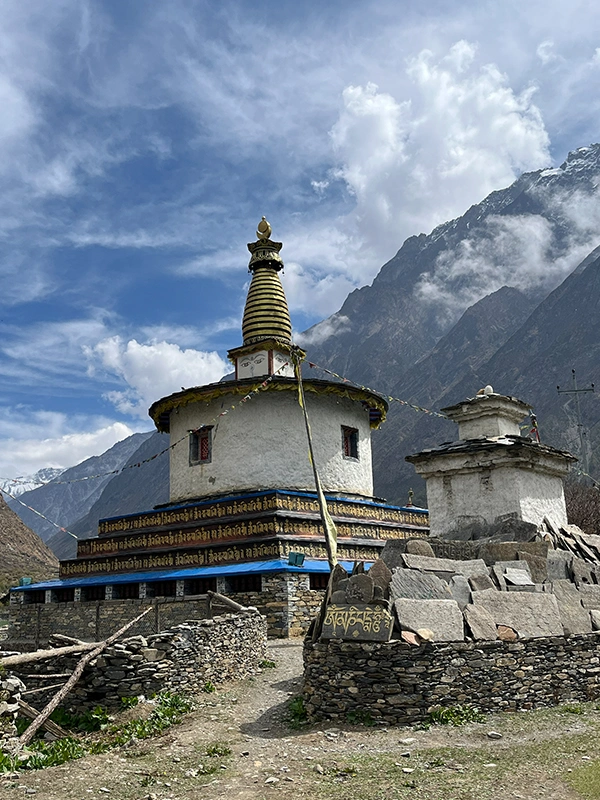
The Manaslu region is heavily influenced by Tibetan Buddhism due to its proximity to the Tibetan border. Ancient monasteries, mani walls, chortens, and prayer flags line the trail, reflecting centuries-old spiritual traditions. Villages such as Samagaun and Samdo preserve traditional stone architecture and trans-Himalayan trade heritage.

Unlike more commercial trekking routes, Manaslu villages maintain a slower pace of life rooted in agriculture and yak herding. Trekking here provides meaningful cultural interaction and insight into Himalayan mountain communities that remain largely unchanged by modernization.

Crossing Larkya La Pass

The crossing of Larkya La Pass (5,106m) is the technical and physical highlight of the trek. The ascent requires steady pacing, proper acclimatization, and an early alpine start. Snow and strong winds are common, especially during shoulder seasons.

From the summit, trekkers are rewarded with panoramic views of Himlung Himal, Cheo Himal, and Annapurna II. The descent into Bhimthang transitions dramatically from barren high-altitude terrain to lush alpine meadows.

Biodiversity and Landscape Diversity

The trek traverses the Manaslu Conservation Area, home to diverse flora and fauna. Lower elevations feature subtropical forests of sal and pine, while higher zones include rhododendron forests and alpine scrubland. Wildlife sightings may include Himalayan tahr, blue sheep, and various bird species.

The rapid shift in ecological zones within a short horizontal distance makes Manaslu one of Nepal’s most geographically diverse trekking circuits. River valleys, waterfalls, glaciers, and snow-covered peaks define the journey.
Short Itinerary and Map

Manaslu Circuit Trek Detailed Itinerary

Day 1

Arrival in Kathmandu

Upon arrival at Tribhuvan International Airport, you will be received by your trekking representative and transferred to your hotel. After check-in, you will receive a trek briefing covering permits, altitude strategy, safety protocols, and equipment verification. Evening cultural welcome dinner in a traditional Nepali restaurant.

Day 2

Kathmandu Valley Sightseeing

Visit UNESCO World Heritage Sites including:

  • Pashupatinath Temple

  • Boudhanath Stupa

  • Swayambhunath Stupa

  • Kathmandu Durbar Square

Afternoon gear check and permit confirmation for the Manaslu Restricted Area.

Day 3

Drive from Kathmandu to Machha Khola

Early departure via Arughat following the Trishuli River and Budhi Gandaki valley. The road transitions from paved highway to rugged mountain road after Dhading. Scenic terraced hills, waterfalls, and river gorges define the journey.

Day 4

Trek from Machha Khola to Jagat

The trail follows the Budhi Gandaki River through subtropical forest and narrow gorges. Multiple suspension bridge crossings and short ascents. Pass Tatopani (natural hot spring) before reaching Jagat, the official entry point to Manaslu Conservation Area.

Day 5

Trek from Jagat to Deng

Gradual ascent through Salleri and Sirdibas villages. The landscape shifts from subtropical forest to steeper canyon terrain. Mani walls, chortens, and Buddhist prayer flags mark the transition toward Tibetan-influenced settlements.

Day 6

Trek from Deng to Namrung

The valley widens slightly. Cross the Budhi Gandaki multiple times before ascending to Namrung. Vegetation transitions into pine and rhododendron forests. First substantial Himalayan views appear.

Day 7

Trek from Namrung to Samagaun

Pass through Lho village with outstanding views of Mount Manaslu (8,163m). Continue through Shyala village surrounded by Himalayan giants. Terrain becomes alpine with reduced tree line approaching Samagaun.

Day 8

Acclimatization Day – Samagaun

Strategic acclimatization hike following the “climb high, sleep low” principle.

Optional hikes:

  • Birendra Lake

  • Pungyen Gompa (4,400m)

Light trekking improves red blood cell adaptation before crossing high pass.

Day 9

Trek from Samagaun to Samdo

Short but important altitude gain. The trail gradually ascends along a wide glacial valley toward the Tibetan border. Dry, barren terrain replaces vegetation.

Day 10

Trek from Samdo to Dharamsala / Larkya Phedi

Steady ascent over rocky moraine terrain. Cross wooden bridges and glacier-fed streams. Oxygen level noticeably thinner. Prepare for early pass crossing next day.

Day 11

Dharamsala to Bhimthang via Larkya La Pass

Longest and most demanding day. Early alpine start (around 3–4 AM). Gradual ascent over snow and glacial moraine to the pass at 5,106m. Panoramic views of:

  • Himlung Himal

  • Cheo Himal

  • Annapurna II

Day 12

Trek from Bhimthang to Tilije

Significant descent through alpine meadows into dense rhododendron and pine forests. River crossings and agricultural settlements mark entry into lower altitude zone.

Day 13

Trek to Dharapani & same day drive to Besi Sahar

Short trek to Dharapani connecting with Annapurna Circuit route. Off-road jeep drive to Besi Sahar.

Day 14

Drive from Besi Sahar to Kathmandu

Scenic drive along Marsyangdi and Trishuli river valleys.

Day 15

Leisure / Contingency Day in Kathmandu

Optional shopping, spa, or Everest scenic flight. Reserved as buffer for weather delays.

Day 16

Final Departure

Airport transfer according to flight schedule.

Are you still confuse from where to start? GMT Adventures has solutions.

Cost Details

Included

1. Accommodation

  • Three (3) nights hotel stay in Kathmandu on a Bed & Breakfast (B&B) basis.

  • Lodging during the trekking period with full board meals (Breakfast, Lunch, and Dinner).

2. Transportation & Transfers

  • All necessary ground transportation during the trip as per itinerary, including:

  • Drive from Kathmandu to Machha Khola.

  • Jeep transfer from Dharapani to Besishar and Besisahar to Kathmandu.

  • Transportation arrangements for Nepali trekking staff (guide and porters).

3. Permits & Government Fees

  • Manaslu Restricted Area Permit (RAC).

  • Manaslu Conservation Area Permit (MCAP) Entry Fee.

  • Annapurna Conservation Area Permit (ACAP) Entry Fee.

  • All applicable government taxes.

4. Guide & Support Staff

  • Experienced, licensed, English-speaking trekking guide (mandatory for restricted area).

  • Porters to carry main luggage (shared between trekkers).

  • Full wages, accommodation, meals, and equipment for all trekking staff.

5. Staff Welfare & Insurance

  • Accidental insurance coverage for Nepali trekking staff (guide and porters).

6. Equipment & Safety

  • Group gear such as first-aid kits and emergency supplies.

7. Logistics & Services

  • Overall trek organization, management, and operational support.

  • Company service charge and administrative expenses.

8. Complimentary Items

  • GMT Adventures branded duffle bag (75 liter)

  • GMT Adventures branded cap

Excluded

1. International Travel & Visa

  • International airfare to and from Kathmandu.

2. Insurance & Emergency Services

  • Personal travel insurance (mandatory; must cover high-altitude trekking and rescue).

  • Emergency helicopter rescue or evacuation, if required.

3. Meals Not Included

  • Lunch and dinner in Kathmandu and Pokhara (not included in itinerary).

4. Personal Expenses & Gear

  • Cold drinks, bottled water, juices, alcoholic beverages, snacks.

  • Telephone calls, internet/Wi-Fi, laundry, and other personal expenses.

  • Personal trekking gear and equipment (e.g., boots, down jacket, sleeping bag – rental available).

  • Charging electronic devices, hot showers at lodges, and other communication costs during the trek.

5. Tips & Gratuities

  • Tips for trekking guide(s) and porters (customary at the end of the trek).

6. Miscellaneous

  • Any expenses not specifically mentioned in the Cost Includes section.

Equipment Lists

A detailed list of recommended equipment is listed below to help trekkers prepare effectively for the journey.

Head
+
  • Warm hat / beanie
  • Sun hat / cap
  • Buff or scarf
  • Sunglasses (UV-protected)
Upper Body
+
  • Base layer shirts (moisture-wicking)
  • Fleece jacket or sweater
  • Insulated down jacket
  • Lightweight wind/waterproof jacket
Hands
+
  • Light trekking gloves
  • Insulated / warm gloves
  • Glove liners (optional)
Lower Body
+
  • Trekking pants
  • Insulated pants (optional)
  • Thermal leggings / base layer
  • Shorts (optional)
Foot Wear
+
  • Waterproof trekking boots (broken-in)
  • Camp shoes / sandals
  • Wool or synthetic trekking socks
  • Liner socks (optional)
Travel Documents
+
  • Passport & visa
  • Trekking permits (Langtang National Park & TIMS)
  • Travel insurance copy
Sun Stuffs
+
  • Sunscreen (SPF 30+)
  • Lip balm with SPF
Toiletries
+
  • Toothbrush
  • Toothpaste
  • Quick-dry towel
  • Biodegradable soap / shampoo
  • Moisturizer / hand cream
  • Toilet paper / wet wipes
  • Personal hygiene items
Eating & Drinking
+
  • Water bottles or hydration system (2–3 liters)
  • Water purification tablets / filter
  • Lightweight bowl, cup, and spoon/fork (optional)
Sleeping Bags
+
  • Three-season sleeping bag (–5°C to –10°C)
  • Optional liner
Bag Packs
+
  • Daypack (20–30 L)
  • Duffel bag / main backpack (50–65 L)
  • Dry bags / plastic covers for rain protection
Medical & First Aid
+
  • Personal medication
  • Painkillers / anti-inflammatory medicine
  • Anti-altitude sickness medication (if prescribed)
  • Bandages / blister pads
  • Antiseptic cream
  • Hand sanitizer
Miscellaneous
+
  • Trekking poles (recommended)
  • Headlamp with extra batteries
  • Camera or smartphone
  • Notebook and pen / travel journal
  • Lightweight snacks (energy bars, nuts)
  • Plastic bags for trash

Essential Information

Permit Requirements

The Manaslu region is classified as a restricted area by the Government of Nepal. Trekkers must obtain a Manaslu Restricted Area Permit (RAP), along with Manaslu Conservation Area Permit (MCAP) and Annapurna Conservation Area Permit (ACAP). A licensed guide and minimum two trekkers are mandatory.

Permit fees vary depending on season, with higher costs during peak trekking months. All documentation must be processed through a registered trekking agency in Nepal.

Best Time to Trek

The best seasons are spring (March–May) and autumn (September–November). These months offer stable weather, clear mountain views, and safer high-pass crossings. Daytime temperatures are moderate, while nights become cold above 3,500m.

Winter trekking is possible but involves heavy snowfall at Larkya La Pass. The monsoon season (June–August) brings landslides, muddy trails, and limited visibility.

Accommodation and Meals

Accommodation along the route consists of teahouses providing basic twin-sharing rooms. Facilities become more limited at higher elevations, especially in Dharamsala before the pass.

Meals typically include Nepali dal bhat, noodles, soups, potatoes, pancakes, eggs, and tea/coffee. Food variety decreases with altitude, and prices increase due to transportation logistics.

Difficulty and Fitness Level

Manaslu Circuit is considered moderate to challenging due to long trekking days, high altitude, and remote terrain. The Larkya La crossing demands strong cardiovascular endurance and prior trekking experience is recommended.

Trekkers should prepare with endurance training, strength conditioning, and multi-day hiking practice before arrival in Nepal.

Altitude and Acclimatization

Gradual altitude gain and scheduled acclimatization days are critical to minimize Acute Mountain Sickness (AMS). Hydration, slow pacing, and proper rest are essential.

Symptoms such as headache, nausea, and dizziness should not be ignored. Guides are trained to monitor altitude-related health concerns.

Transportation and Accessibility

Access to the trailhead involves a long overland drive from Kathmandu to Machha Khola. Road conditions vary from paved highways to rugged mountain tracks.

Return from Dharapani connects with the Annapurna region road network, allowing jeep transfer to Besi Sahar and onward drive to Kathmandu.

Good to Know

Why Choose GMT Adventures for Manaslu Circuit Trek?

Choosing GMT Adventures means trekking with a company that blends local expertise, professional expedition experience, and personal attention to every detail. CEO Gesman, who worked alongside Nims Purja during the 14 Peaks project, brings world-class high-altitude experience and expedition standards to every trek. From itinerary planning to guide selection and safety measures, every aspect is handled with professionalism, ensuring a smooth, safe, and memorable trekking experience.

GMT Adventures focuses on client comfort and satisfaction. With experienced guides, well-structured itineraries, transparent services, and hands-on management, the company ensures travelers can fully immerse themselves in the Himalayas while leaving logistics, safety, and support to the professionals. Trekking with GMT Adventures guarantees a seamless, high-quality, and rewarding Everest journey.

Personalized Journeys Made Simple with GMT Adventures

Customization is essential because every traveler has unique preferences, fitness levels, schedules, and expectations, which can greatly influence the overall trekking experience. By allowing adjustments in pace, itinerary, accommodation standards, or rest days, each journey can be tailored to ensure maximum comfort, safety, and enjoyment. With GMT Adventures, this flexibility is fully supported, allowing trekkers to design an adventure that aligns perfectly with their personal needs and goals. Personalized planning ensures that every experience is not only memorable but also fully adapted to the traveler’s individual preferences, making each journey both rewarding and stress-free.

You May Also Like

Need Help? Call Us+977 9823373306