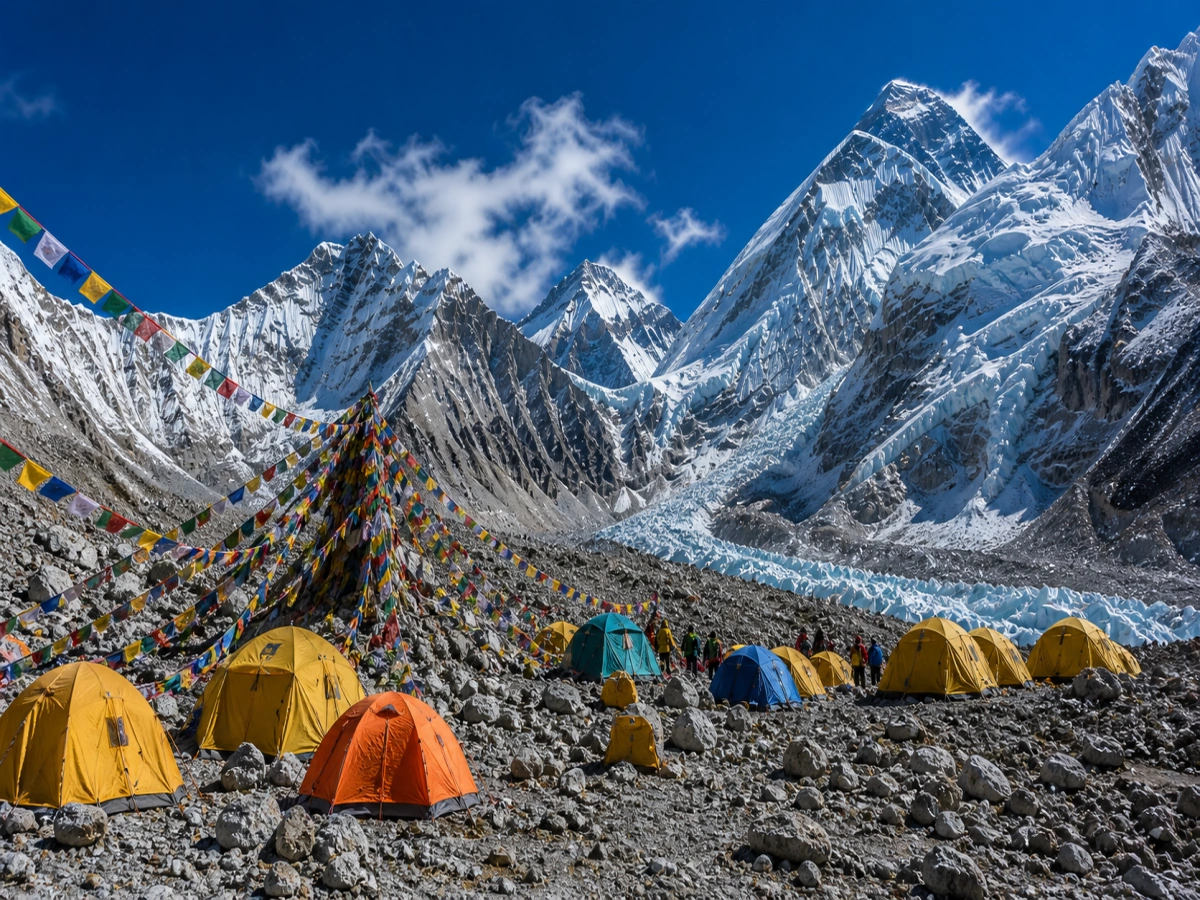
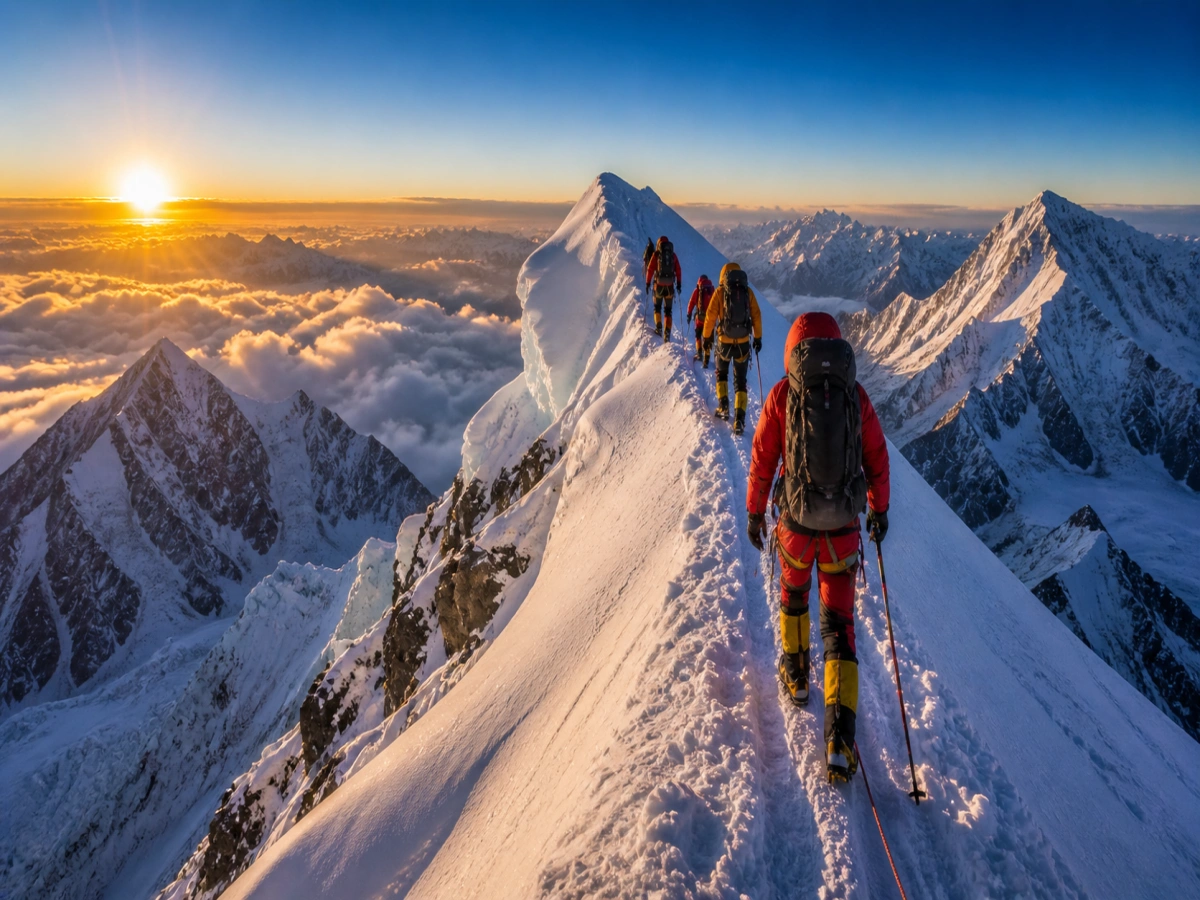
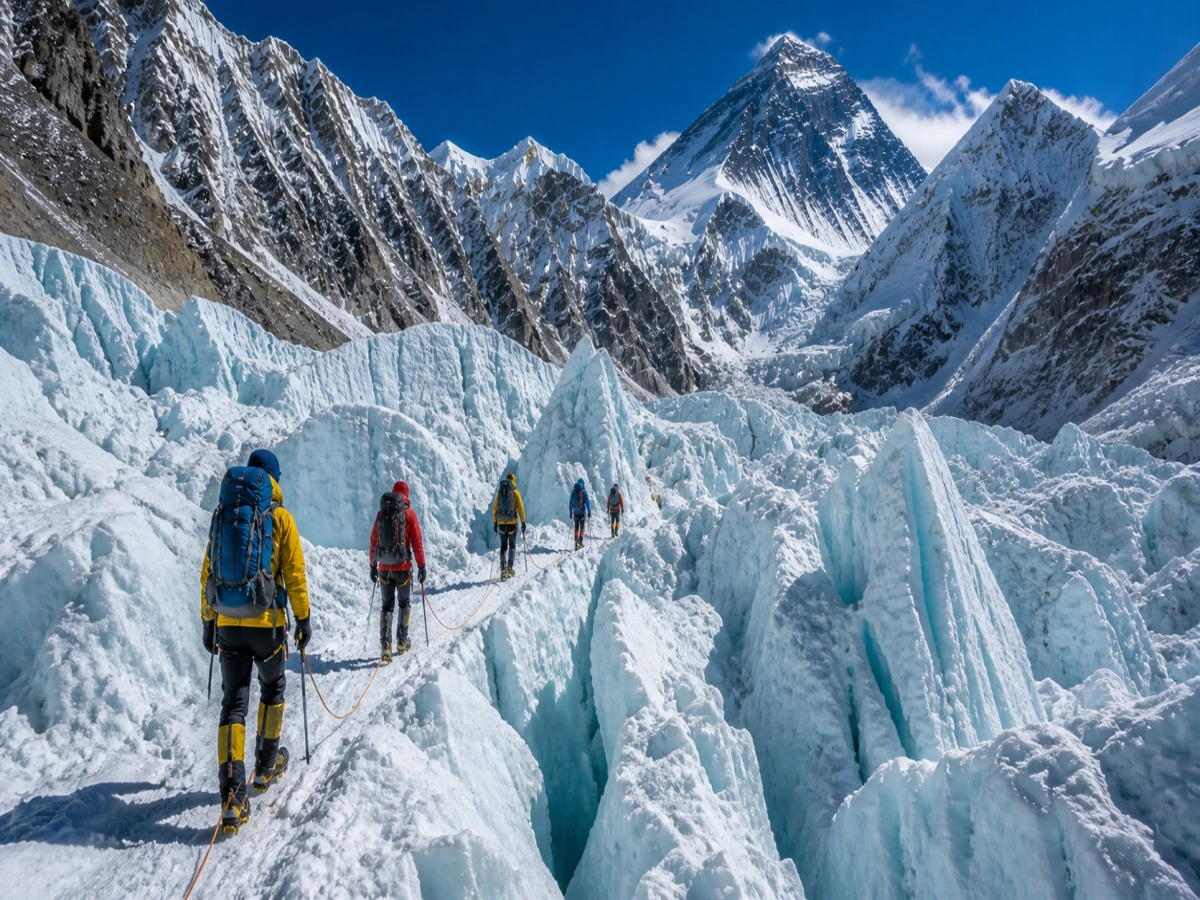
The Everest + Lhotse Expedition is a premier high-altitude mountaineering challenge that offers climbers the rare opportunity to summit the world’s highest mountain, Mount Everest (8,848.86m), along with its formidable neighbor, Mount Lhotse (8,516m), in a single, well-structured expedition. Set in Nepal’s iconic Khumbu region, this expedition follows the classic South Col route, navigating through legendary locations such as the Khumbu Icefall, Western Cwm, Lhotse Face, and the South Col.
Designed for experienced alpinists, the expedition emphasizes systematic acclimatization, safety-focused logistics, and strong climbing guide support. Over a 60-day period, climbers undergo multiple rotations between Base Camp and higher camps to adapt to extreme altitude before attempting both summits during the optimal weather window. Beyond the climbing challenge, the journey offers deep cultural immersion in Sherpa villages and unparalleled Himalayan scenery, making it one of the most rewarding expeditions on earth.
Trip Highlights
-
Summit two of the world’s highest peaks in a single expedition
-
Follow the legendary South Col route
-
Extended acclimatization for higher success rates
-
Professional climbing guide support and fixed-rope systems
-
Experience life at Everest Base Camp (5,364m)
-
Traverse iconic landmarks: Khumbu Icefall, Western Cwm, Lhotse Face
-
Spectacular Himalayan views and Sherpa culture immersion
-
Fully supported, safety-focused expedition logistics
Expedition Route & Climbing Strategy
The Everest + Lhotse Expedition follows the classic South Col route, the most established and systematically supported climbing line on both peaks. The approach begins from Everest Base Camp, ascending through the technically demanding Khumbu Icefall to Camp I, then progressing across the broad glacial basin of the Western Cwm to Camp II. From here, climbers ascend the steep and icy Lhotse Face to reach Camp III, where the route for Everest and Lhotse continues jointly. Camp IV is established at the South Col, serving as the final staging point for summit attempts. From this camp, climbers either proceed toward Everest’s summit via the Balcony and Hillary Step or diverge into the steep couloir leading to Lhotse’s summit. This shared route structure allows efficient logistics, shared rope fixing, and strategic timing for attempting both summits within a single expedition.
Acclimatization & Rotation Plan
Acclimatization is a critical component of success and safety on the Everest + Lhotse Expedition. Climbers spend several weeks completing carefully planned rotations between Base Camp and higher camps, progressively increasing altitude exposure while allowing sufficient rest and recovery. These rotations involve climbing to Camps I, II, and III, often carrying loads and spending nights at higher elevations before descending back to Base Camp. This gradual process allows the body to adapt to lower oxygen levels, significantly reducing the risk of altitude-related illnesses. The extended acclimatization period also provides time for technical training in the Khumbu Icefall, familiarization with fixed ropes, and overall physical and mental conditioning before the summit phase begins.