Understanding the Manaslu climbing route helps climbers prepare physically and mentally for each stage of the expedition. Although the exact line changes slightly every season due to glacier movement and snowfall, the standard northeast route follows a series of four high camps before reaching the summit.
Manaslu Base Camp (4,750m)
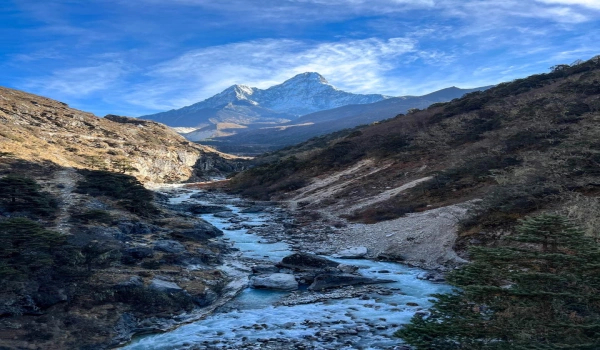
The expedition begins at Manaslu Base Camp, located on rocky glacial moraine below the northeast face of the mountain. The camp sits beside the lower Manaslu Glacier and serves as the operational center for the expedition. Teams spend several days here organizing equipment, conducting safety briefings, and completing acclimatization hikes before moving higher. Medical checks, weather briefings, and fixed rope updates are part of the daily routine.
Terrain around Base Camp consists mainly of:
- Rocky moraine
- Loose scree
- Glacier ice
- Small streams formed by melting snow
Although Base Camp is below the permanent snow line during warmer periods, freezing temperatures are common overnight.
Base Camp to Camp 1 (4,750m–5,800m)
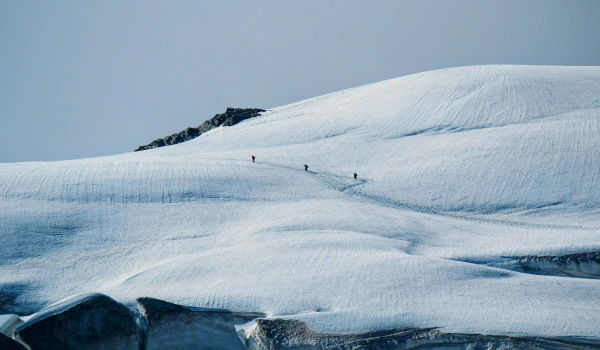
The climb from Base Camp to Camp 1 marks the transition from rocky terrain to glacier travel. Climbers rope together as they enter the lower Manaslu Glacier, crossing broken ice, snow bridges, and crevasse fields. Depending on seasonal conditions, expedition teams may install aluminum ladders across larger crevasses to improve safety. The slope gradually steepens to approximately 30–35 degrees, with fixed ropes protecting exposed sections.
Terrain includes:
- Glacier ice
- Crevasses
- Seracs
- Snow bridges
- Moderate snow slopes
Camp 1 is established on relatively level snow platforms prepared by the rope-fixing team.
Camp 1 to Camp 2 (5,800m–6,400m)
The route between Camp 1 and Camp 2 enters more complex glacier terrain. Climbers weave through broken ice formations while ascending steeper snow slopes that generally range between 35° and 40°. Large crevasses often require careful navigation, and the exact route may change several times during the season as the glacier shifts.
This section features:
- Broken glacier terrain
- Ice towers (seracs)
- Snow gullies
- Fixed rope traverses
- Occasional ladder crossings
Camp 2 is located on a broad glacial bench that provides enough space for several expedition teams while remaining protected from the most active avalanche paths.
Camp 2 to Camp 3 (6,400m–6,800m)
Above Camp 2, the mountain becomes increasingly alpine. The glacier begins to smooth out, but the climbing becomes steeper. Long snow slopes lead toward Camp 3, where deep snow and wind loading can significantly affect progress.
This section commonly involves:
- Continuous fixed-rope climbing
- Snow slopes between 35° and 45°
- Wind-packed snow
- Hard alpine snow
- Short ice sections exposed by strong winds
As oxygen levels continue to decrease, climbers move more slowly and spend limited time at Camp 3 to reduce the effects of prolonged high-altitude exposure.
Camp 3 to Camp 4 (6,800m–7,400m)
The climb to Camp 4 enters the upper mountain. Here the terrain becomes more exposed, and weather plays an increasingly important role in summit planning. Strong winds can scour the slopes, leaving sections of hard alpine ice, while fresh storms may deposit deep unconsolidated snow.
Climbers ascend:
- Long snow ramps
- Steep fixed-rope sections
- Wind-scoured ice
- Narrow traverses
- High alpine snowfields
Camp 4 is established on a relatively sheltered section of the upper mountain where climbers prepare for the summit push.
Camp 4 to the Summit (7,400m–8,163m)
Summit day is the most demanding stage of the expedition. Most teams leave Camp 4 between midnight and 2:00 a.m. to maximize stable snow conditions and reach the summit before afternoon weather deteriorates. Above Camp 4, climbers ascend sustained snow slopes before reaching Manaslu's famous summit ridge.
The final section includes:
- Hard snow
- Alpine ice
- Fixed ropes
- Narrow ridgeline
- Large cornices
The summit ridge requires careful foot placement and disciplined movement. Climbers stay on the established route, as overhanging cornices may extend several meters beyond solid ground. After reaching the summit at 8,163 meters, the climb is only halfway complete. Most accidents occur during the descent, making careful energy management essential.
Seasonal Differences on Manaslu
Although both spring and autumn are popular climbing seasons, the mountain behaves differently in each.
| spring (April-May) |
Autumn (Sept-Oct) |
| More stable weather after winter |
Weather depends on the retreat of the monsoon |
| Larger snowpack |
Less snow on the upper mountain in many years |
| Higher avalanche risk early in the season |
More exposed ice if monsoon snowfall is limited |
| Cooler temperatures |
Slightly warmer lower mountain |
| Most commercial expeditions operate |
Fewer expedition and generally less crowded |
Snowpack Changes
Snow conditions vary considerably between seasons and even from year to year.
- Heavy winter snowfall creates deeper powder in spring.
- Autumn often reveals more glacier ice after the summer monsoon melts seasonal snow.
- Strong winds can expose blue ice within hours.
- Fresh storms may completely alter the climbing route.
Because of these changes, no two Manaslu expeditions follow exactly the same line.
Route Fixing
The Manaslu climbing route is fixed each season by experienced rope-fixing teams working on behalf of Nepal's expedition operators.
These specialists:
- Assess avalanche hazards
- Select the safest line
- Install thousands of meters of fixed rope
- Place anchors
- Install ladders over major crevasses when necessary
The route may be adjusted multiple times during the season as glaciers move or snow conditions change.
Summit Success Rates
Spring generally records higher summit numbers because of more predictable weather windows and greater expedition participation. However, success depends on several factors:
- Snow stability
- Wind speed
- Avalanche conditions
- Team acclimatization
- Individual fitness
- Decision-making
Turning around due to unsafe conditions is considered good mountaineering, not failure.
Why Manaslu Is Considered an Ideal First 8,000-Meter Peak
Among the world's fourteen 8,000-meter mountains, Manaslu is often recommended as an excellent introduction to high-altitude expedition climbing—not because it is easy, but because it offers a manageable balance of technical difficulty and extreme altitude.
Technical Difficulty
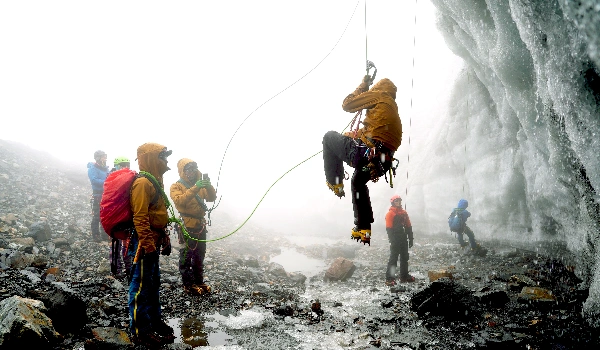
Compared with peaks such as K2 or Annapurna, the standard route on Manaslu involves relatively little sustained rock climbing. Most of the ascent follows snow and glacier terrain protected by fixed ropes. Climbers should still be confident using crampons, an ice axe, a jumar (ascender), and descending with a figure-eight or belay device.
Extreme Altitude
At 8,163 meters, the mountain rises well into the "death zone," where oxygen levels are roughly one-third of those at sea level. Altitude—not technical climbing—is the greatest challenge, and every step requires careful pacing and disciplined energy management.
Expedition Length
A typical Manaslu expedition lasts 30 to 40 days, allowing sufficient time for trekking, acclimatization, weather delays, and summit attempts. This schedule helps reduce the risk of altitude illness compared with rushed ascents.
Objective Hazards
Manaslu presents real alpine hazards, including:
- Avalanches
- Crevasses
- Seracs
- Cornices
- Severe storms
- Extreme cold
While these hazards are significant, careful planning, experienced leadership, and adherence to fixed routes help manage the risks.
Acclimatization
The expedition follows a gradual ascent with repeated rotations between camps, allowing climbers to adapt to decreasing oxygen levels. A well-planned acclimatization strategy greatly improves both safety and the likelihood of reaching the summit.
Professional Guide Insight
Experienced Himalayan guides know that success on Manaslu depends less on speed and more on timing. Summit pushes typically begin shortly after midnight, when snow is colder and more stable, reducing exposure to warming conditions that can increase avalanche risk later in the day. Guides closely monitor overnight temperatures, wind forecasts, and snowfall before deciding whether to proceed. Throughout the expedition, guides continually evaluate snowpack, crevasse bridges, and fixed ropes. If conditions deteriorate, they may delay movement, reroute sections of the climb, or postpone a summit attempt entirely. These conservative decisions are a hallmark of safe expedition leadership. Another key principle is energy conservation. Experienced climbers maintain a steady pace, eat and hydrate regularly, and avoid unnecessary exertion at altitude, where even simple tasks demand significantly more effort than at sea level.